
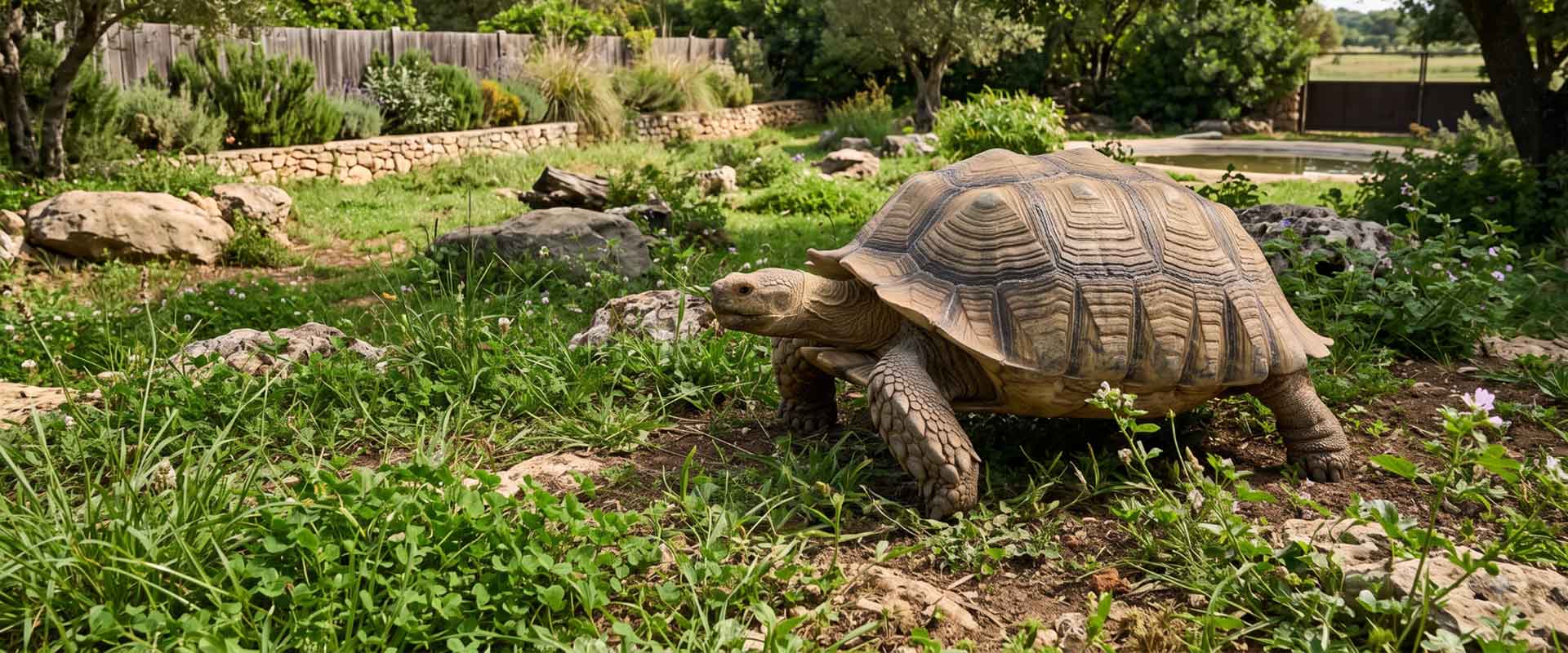
Adult Sulcatas: Long-Term Care for a Giant Tortoise
By adulthood, caring for a sulcata is less about managing a fragile young tortoise and more about maintaining the environment, nutrition and infrastructure needed by a very large grazing animal.
Adult sulcatas need significant outdoor space, strong barriers, appropriate shelter, a dependable long-term feeding plan and an owner prepared for the realities of caring for a powerful tortoise for decades.
If you’re reaching this stage, the decisions you made during the growth years now become the foundation of everyday adult care.
SRC’s current ownership content similarly shifts the emphasis toward outdoor infrastructure, long-term diet, veterinary care, transport and lifetime planning as the animal matures.
Adult Sulcata Care at a Glance
Adult Care Is About Infrastructure
1
Space Is Essential
A mature sulcata is an active terrestrial tortoise, not an animal suited to spending its life in a small pen.
Your enclosure needs enough usable area for walking, grazing, thermoregulation and exploration while also being designed to withstand the strength of a large tortoise.
2
Secure the Perimeter
Adult sulcatas are powerful diggers and persistent explorers.
Fencing should be designed for the animal you have—not simply adapted from fencing intended for a dog or garden.
Inspect the perimeter regularly for digging, weakened barriers and areas where a tortoise could push, climb or become trapped.
3
Provide Shelter From Weather Extremes
Outdoor living doesn’t mean exposure to every condition.
Adult sulcatas need access to shade and a protected retreat. In climates with cool seasons, owners may also need an appropriately designed heated shelter.
Your tortoise should always be able to move to a safer microclimate when conditions change.
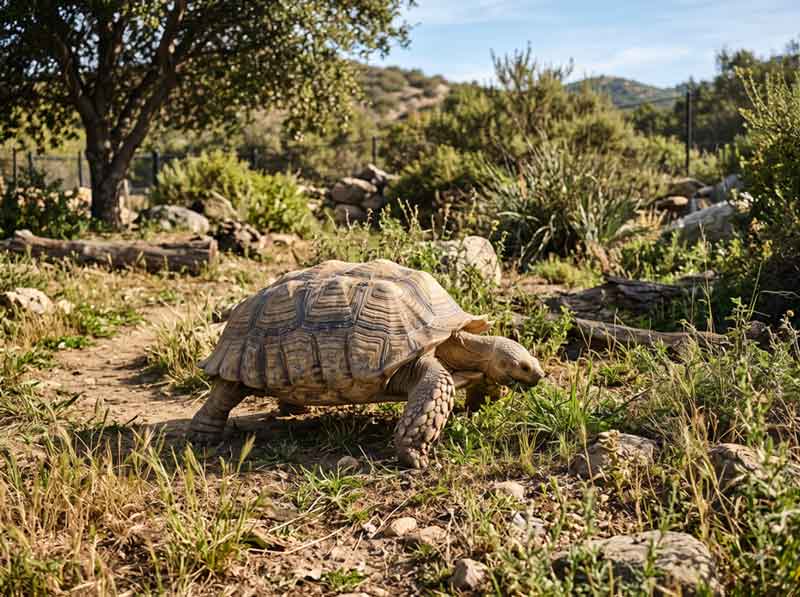
Feeding an Adult Sulcata
Adult feeding should resemble grazing more than serving a bowl of produce.
Appropriate grasses and hay can make up the foundation, supplemented by safe weeds, flowers and other species-appropriate plant material.
Variety matters—but variety doesn’t mean feeding everything a tortoise is willing to eat.
Adult Behavior: Expect a Stronger Personality
As sulcatas mature, natural behaviors become much harder to ignore simply because the animal is so much larger.
Adults may:
- dig or burrow;
- push against fencing or objects;
- investigate changes in their enclosure;
- establish preferred resting and basking locations;
- travel repeatedly along familiar routes;
- show sex-related or territorial behaviors.
Enrichment for an adult doesn’t need to resemble a conventional pet toy. Varied terrain, grazing opportunities, safe obstacles, shade, digging areas and changes in foraging location can all make the environment more engaging.
Know Your Sulcata’s Sex
Physical differences generally become easier to evaluate as sulcatas mature.
Knowing whether you have a male or female can become particularly useful when considering adult behavior, housing multiple tortoises and reproductive considerations.

Adult Sulcata Health Monitoring
Large tortoises can make veterinary care and transportation more complicated, so establishing a relationship with an experienced reptile or exotics veterinarian before an emergency occurs is a smart part of long-term planning. SRC’s current ownership guide makes the same recommendation and specifically notes that transportation becomes a consideration as sulcatas become very large.
At home, keep watching for changes in:
- appetite;
- activity;
- mobility;
- breathing;
- eyes and nasal discharge;
- stool and urates;
- shell condition;
- body condition; and
- behavior that is unusual for your individual tortoise.
Common Adult Sulcata Mistakes
Recommended Adult Sulcata Resources

Sulcata Tortoise Outdoor Enclosure
Create safe, functional outdoor living space.
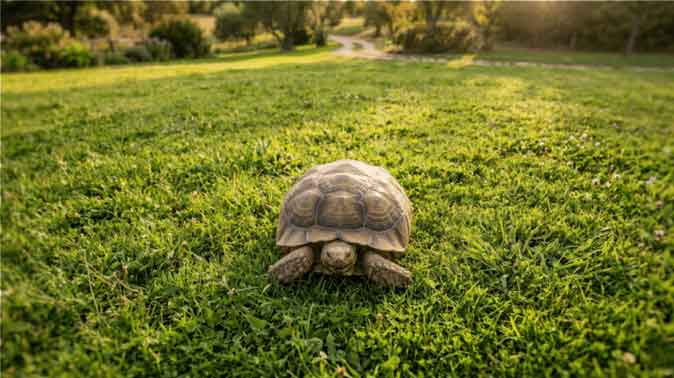
Sulcata Tortoise Food List
Build an appropriate long-term grazing diet.

Sulcata Tortoise Size by Age
Understand how growth changes housing and handling.

How to Sex a Sulcata Tortoise
Learn the physical characteristics used to distinguish males and females.
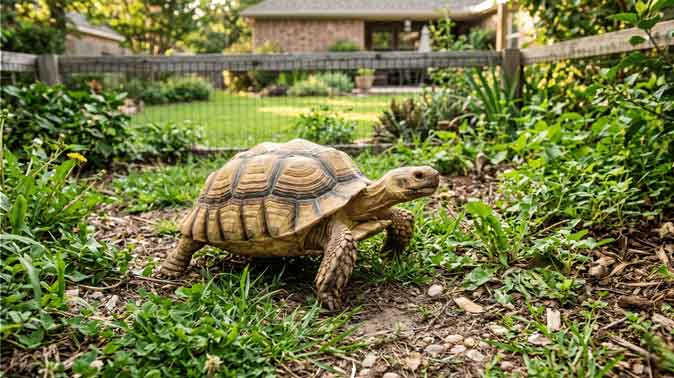
Is a Sulcata a Good Pet?
Understand the complete long-term ownership commitment.
Caring for a Sulcata Is a Long Game
A healthy adult sulcata is the result of thousands of ordinary care decisions made consistently over time.
Provide enough space. Feed appropriately. Keep the environment safe. Pay attention to changes. And keep adapting your care as your tortoise—and your circumstances—change.