
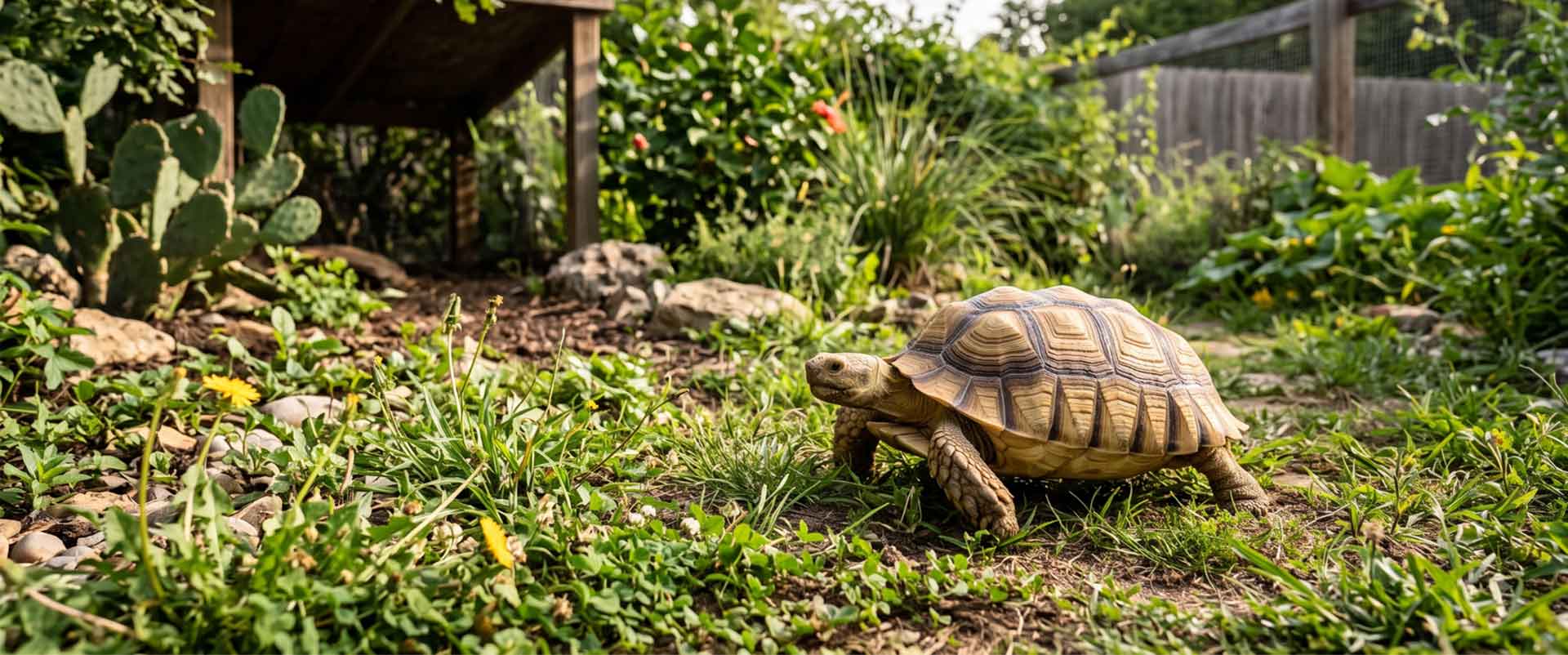
Juvenile Sulcatas: Care Through the Growing Years
The juvenile years are when a tiny sulcata begins turning into the large, powerful tortoise owners imagined when they first brought it home.
Growth continues, housing needs increase, outdoor time becomes more important, and the habits established during the baby stage need to evolve with your tortoise.
For this page, think broadly about the growing years—from approximately age one through the sub-adult stage. Individual sulcatas grow at very different rates, so size, development and husbandry needs matter more than a birthday alone.
SRC’s size guide shows substantial ranges in shell length and weight at the same ages, which is exactly why I would avoid rigid age cutoffs here.
Juvenile Sulcata Care at a Glance
Your Juvenile Sulcata Is Changing Fast
1
Give Them Room to Grow
An enclosure that worked six months ago may no longer be enough.
Growing sulcatas become increasingly active, strong and determined. They need room to walk, explore, graze, thermoregulate and engage in natural behaviors.
This is the stage when owners should stop thinking only about the enclosure they have today and start planning the environment their tortoise will need next.
2
Keep the Diet Grass-Forward
Juvenile sulcatas are still growing, but rapid growth isn’t the goal.
Continue building the diet around high-fiber foods such as appropriate grasses, hay and safe weeds rather than using rich foods to push faster size gains.
3
Keep Watching the Shell
Pyramiding is easiest to prevent during growth—not after abnormal shell development has already occurred.
Nutrition is only one piece of the puzzle. Environment, hydration, activity, calcium and UVB all need to work together.
SRC’s existing pyramiding guide discusses environmental conditions, growth rate, mineral balance, exercise and temperature together rather than treating shell appearance as a single-variable nutrition problem.
Start Thinking Like an Adult-Sulcata Owner
A juvenile sulcata may still be manageable indoors or in a modest enclosure, but that won’t last.
Start planning for:
- A secure outdoor enclosure
- Strong perimeter barriers
- Space for grazing and movement
- Shade and shelter
- Safe digging and burrowing behavior
- Heat during colder weather
- A plan for transport and veterinary visits

SRC’s ownership guide specifically identifies outdoor housing as one of the major transitions through the juvenile/sub-adult years.
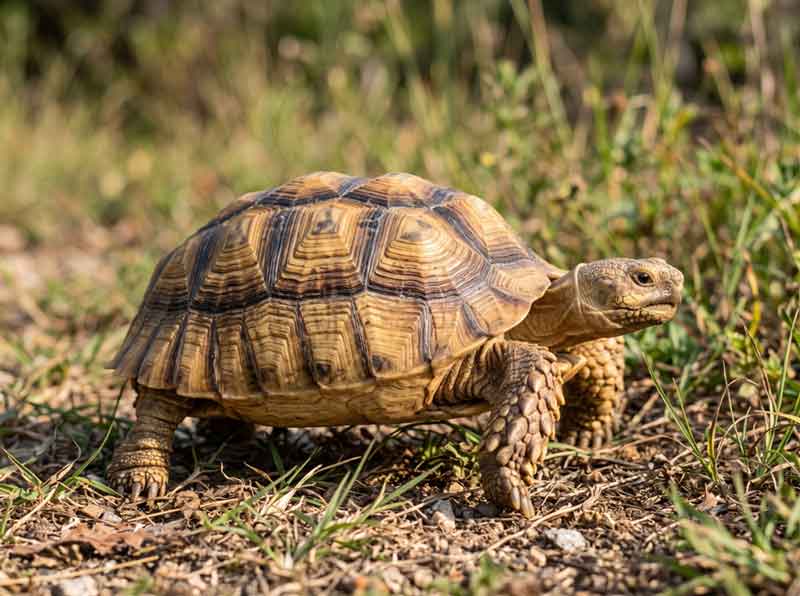
Is My Juvenile Growing Normally?
Sulcata growth varies substantially from one animal to another.
Instead of comparing your tortoise with photos of someone else’s sulcata online, watch its individual trend over time.
Consistent measurements and photographs can help you notice changes in growth and shell development.
Common Juvenile Sulcata Mistakes
Recommended Juvenile Resources
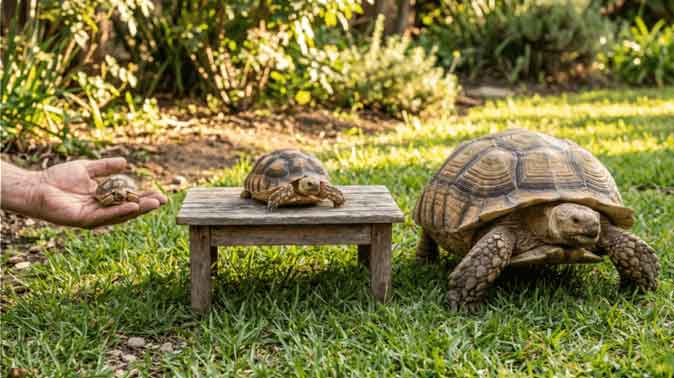
Sulcata Tortoise Size by Age
Understand growth ranges and how size changes care requirements.

Sulcata Tortoise Outdoor Enclosure
Start planning for safe, appropriate outdoor housing.

Sulcata Shell Pyramiding
Learn what abnormal shell growth can tell you about husbandry.
Sulcata Tortoise Food List
Know what belongs in a long-term sulcata diet.
The Adult Years Are Coming
A sulcata’s transition to adulthood changes the scale of ownership dramatically.
Housing becomes permanent infrastructure, strength increases, outdoor grazing becomes increasingly useful, and long-term planning matters more than ever.