The sulcata tortoise price question has two parts, and most buyers only research the first one. The purchase price — what you pay to bring a tortoise home — is the smallest number in the full financial picture of sulcata ownership. The costs that follow over the next 10, 20, and 50 years are where the real commitment lives.
This guide covers both parts honestly. You’ll find current sulcata tortoise price ranges by age and source, a complete cost breakdown table covering setup and ongoing expenses, a realistic 10-year cost estimate, and the factors that drive price variation — including the red flags that indicate a price is suspiciously low for the wrong reasons. If you’re seriously considering bringing a sulcata into your life, this is the financial picture you need to see before you commit.
What Drives Sulcata Tortoise Price Variation?
Sulcata tortoise prices vary more than most buyers expect, and the variation isn’t random. Understanding what drives it helps you evaluate whether a price is fair, premium for good reason, or a warning sign.
Age and Size
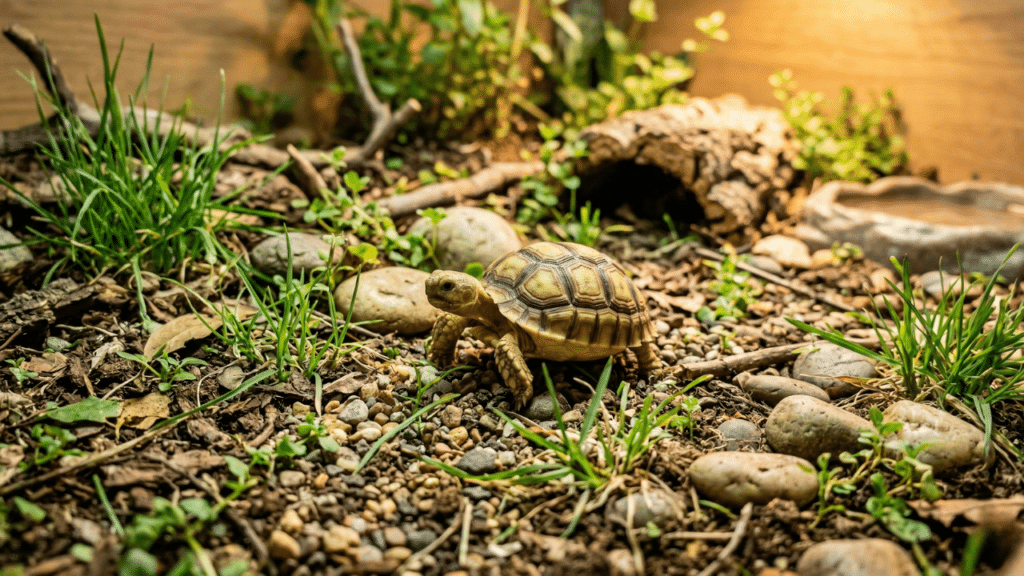
Older sulcatas cost more, and the reason is straightforward: every year of quality care represents real investment by the breeder or seller. A 3-year-old juvenile has had three years of correct feeding, appropriate housing, calcium supplementation, and health monitoring. A hatchling has had none of that. The price difference reflects both the cost of that care and the reduced risk to the buyer — juveniles and adults have cleared the early-life mortality window that hatchlings are most vulnerable to.
Breeder Reputation and Husbandry Quality
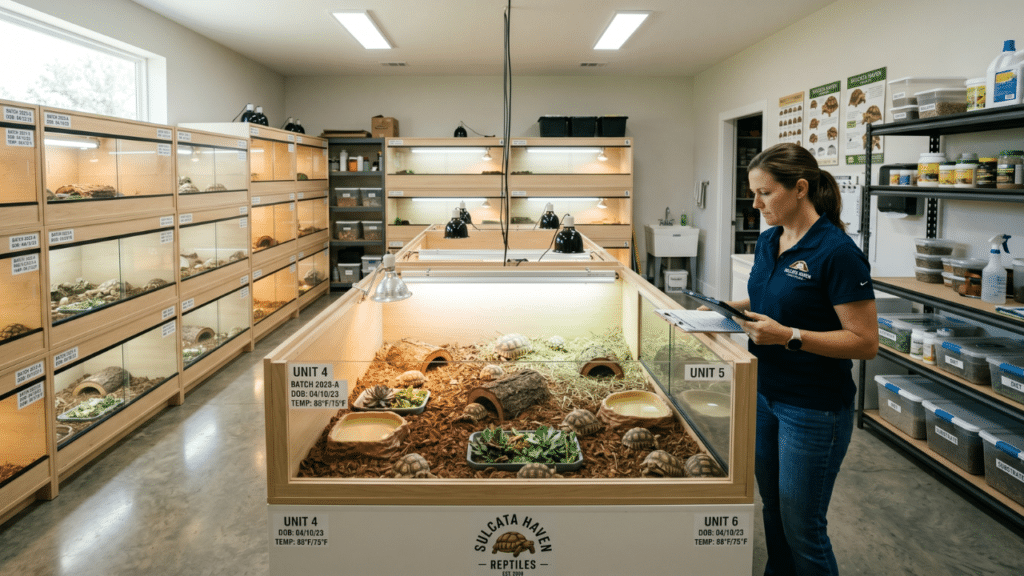
High-demand breeders who follow strict protocols — correct parental nutrition, appropriate incubation temperatures, species-appropriate early diet, documented health history — charge more than casual or volume breeders. That premium is real and worth paying. A hatchling from a quality breeder that has been correctly fed from day one has a meaningfully better start than one from a seller whose husbandry practices are unknown. Shell quality, early growth patterns, and gut health in the first months have lasting consequences.
Morph and Coloration
Standard sulcatas are the most widely available and the most affordable. Certain color morphs — albino, melanistic, and other naturally occurring variations — command significant premiums, sometimes several times the price of a standard animal. For a companion pet, morphs offer no practical advantage, and the price premium is purely aesthetic. For a breeding program with a specific focus, morphs may have value. For most owners, a healthy standard sulcata is the right choice.
Red Flags: When a Sulcata Tortoise Price Is Too Low
A sulcata tortoise priced significantly below the ranges in this guide is worth approaching with caution. Hatchlings sold for under $50, juveniles under $100, or adults offered for free or near-free are not bargains — they are situations that require explanation. Common causes include unethical or illegal sourcing, undisclosed health problems, unknown parentage and husbandry history, or a rescue situation being misrepresented as a sale.
This doesn’t mean every low-priced sulcata comes with problems — genuine rehomes from families who can no longer provide appropriate care are legitimate and can be excellent acquisitions for experienced keepers. But a very low sulcata tortoise price should prompt more due diligence, not less. Ask questions, request photos of the animal and its current enclosure, ask for a vet history, and understand what you’re taking on before committing.
Sulcata Tortoise Price by Age: What to Expect
The table below covers current sulcata tortoise price ranges from hatchling through adult, along with rescue adoption costs and key considerations at each stage.
| Age / Stage | Typical Price Range | High-End Range | Key Considerations |
|---|---|---|---|
| Hatchling (0–6 months) | $100 – $300 | Up to $500 from high-demand breeders | Most affordable entry point. Requires most intensive early care — hatchlings are fragile and need precise husbandry. |
| Juvenile (1–3 years) | $300 – $600 | $800+ from established breeders | Better survival odds than hatchlings. Recommended for first-time sulcata owners not experienced with hatchling care. |
| Sub-adult (3–6 years) | $500 – $1,200 | $1,500+ | Sexual characteristics beginning to develop. Reduced early health risk. Established feeding habits easier to assess. |
| Adult (6+ years) | $2,000 – $4,000 | $5,000+ for exceptional specimens | Highest purchase cost but lowest early-mortality risk. Full size and sex clearly determinable. Setup costs higher due to space needs. |
| Rescue / re-home | $50 – $500 | Varies; some donation-based only | Lowest acquisition cost. Health history unknown. May require significant vet investment. Excellent option for experienced keepers. |
Shipping costs are an additional factor if you’re purchasing from a non-local breeder. Live reptile shipping is specialized, requires overnight delivery, and can cost $50–$150 or more depending on distance and the shipping service used. Some breeders include shipping in their quoted price; most do not. Always confirm shipping terms before finalizing a purchase.
Are You Starving Your Tortoise?
Save 10% on premium tortoise food and supplements from Tortoise Resource Center on Amazon now using code BUYNOWGET10

Sulcata Vitamin & Mineral Topper Supplement
30-Day Supply | 2 oz (56 g)
$24.99
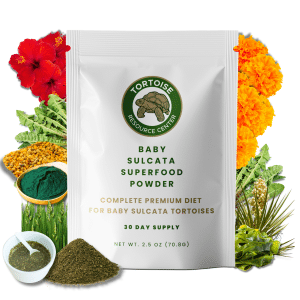
Baby Sulcata Tortoise Superfood Powder
30-Day Supply | 2.5 oz (70.8 g) Bag
$24.99
Breeders vs. Rescues: Which Is Right for You?
Buying from a Reputable Breeder
A reputable breeder offers documented parentage, known husbandry history, a clear early diet record, and usually some form of health guarantee. Many established sulcata breeders maintain waitlists — a waitlist is often itself a positive signal, indicating consistent demand from buyers who trust the source. Expect to pay a fair sulcata tortoise price at this level: $150–$300 for a hatchling, $300–$600 for a juvenile, and $2,000–$4,000 for a healthy adult.
When evaluating a breeder, ask specifically about the parents’ diet and health history, what the hatchlings have been fed since birth, what supplementation protocol was followed, and whether the animals have been seen by a vet. A good breeder welcomes these questions. One who deflects or provides vague answers is worth passing on regardless of price.
Adopting from a Rescue
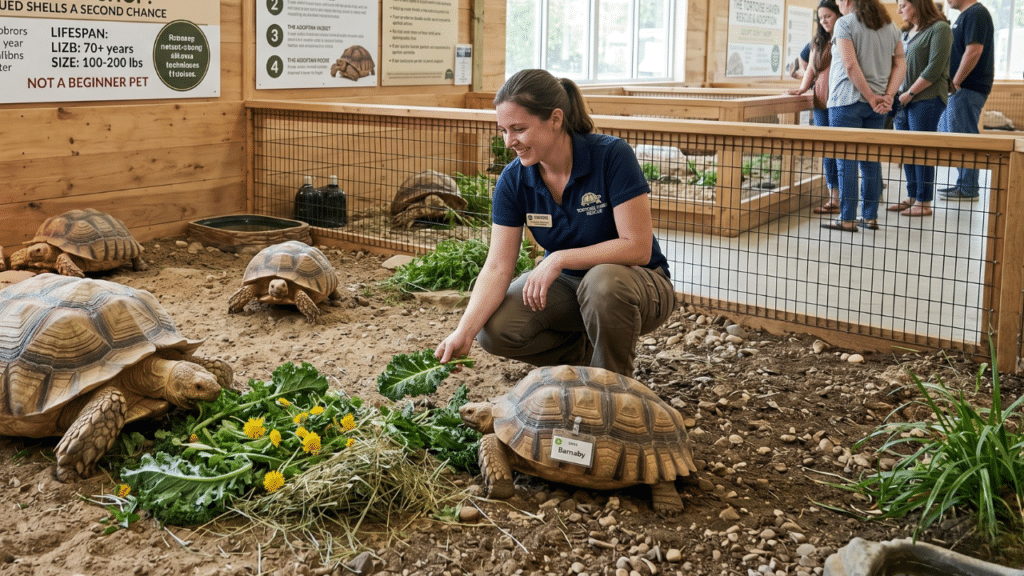
Sulcata rescues exist in significant numbers across the United States, for a straightforward reason: people regularly underestimate the long-term commitment of sulcata ownership and eventually surrender animals they can no longer appropriately house or afford. Adoption fees typically range from $50–$500, with some donation-based rescues charging nothing formal.
The trade-off with rescue adoption is information. Husbandry history is often incomplete or unknown. The tortoise may have experienced periods of incorrect diet, insufficient space, or inadequate supplementation — the consequences of which may not be immediately visible but can emerge over time. Rescue adoption is an excellent choice for experienced sulcata keepers who can accurately assess an animal’s current health and are comfortable managing the unknowns. For a first-time owner, the additional uncertainty can make an already challenging species significantly harder to manage well.
A pre-adoption vet examination by a reptile-experienced veterinarian is strongly recommended for any rescue sulcata, regardless of how healthy the animal appears visually. Budget $75–$200 for this exam, and treat it as part of the acquisition cost, not an optional extra.
The Full Sulcata Tortoise Cost Picture: Setup and Ongoing Expenses
The sulcata tortoise price you pay at acquisition is the beginning of the financial commitment, not the total. The table below breaks down every significant cost category across the ownership lifetime, from initial setup through ongoing annual expenses.
| Cost Category | Low Estimate | High Estimate | Frequency |
|---|---|---|---|
| Tortoise purchase / adoption | $50 | $4,000+ | One-time |
| Outdoor enclosure construction (DIY) | $500 | $3,000+ | One-time |
| Tortoise house / heated shelter | $200 | $1,500 | One-time (with periodic maintenance) |
| Indoor starter enclosure (juvenile) | $100 | $500 | One-time (outgrown within 1–2 years) |
| UVB + basking lighting (indoor) | $80 | $300 | One-time + replacement every 6–12 months |
| Thermostat(s) | $40 | $150 | One-time |
| Substrate (initial fill) | $50 | $300 | One-time + annual top-up ~$50–$100 |
| Food (hay, fresh greens, weeds) | $30/mo | $80/mo | Monthly — lower with outdoor grazing access |
| Calcium + mineral supplements | $15/mo | $40/mo | Monthly |
| Routine vet checkup | $75 | $200 | Annually recommended |
| Emergency / illness vet costs | $200 | $2,000+ | Unpredictable — budget a reserve fund |
| Enclosure maintenance / repairs | $50/yr | $300/yr | Annual average |
| Estimated Year 1 total (outdoor) | $1,500 | $8,000+ | Highly variable by build scope and tortoise age |
| Estimated annual ongoing cost (Year 2+) | $700 | $2,000+ | Per year — lower with outdoor grazing |
What Does a Sulcata Tortoise Actually Cost Over 10 Years?
Running the numbers on a realistic 10-year ownership scenario helps translate the cost table above into something concrete. These figures assume a hatchling purchased from a reputable breeder, transitioned to an outdoor enclosure by year two, with one vet visit per year and no major health crises.
Year 1 is the most expensive: hatchling purchase ($150–$300), indoor juvenile enclosure and lighting setup ($300–$600), food and supplements for 12 months (~$600–$1,000), and initial vet exam ($75–$200). Total Year 1 estimate: $1,200–$2,100 before outdoor enclosure costs.
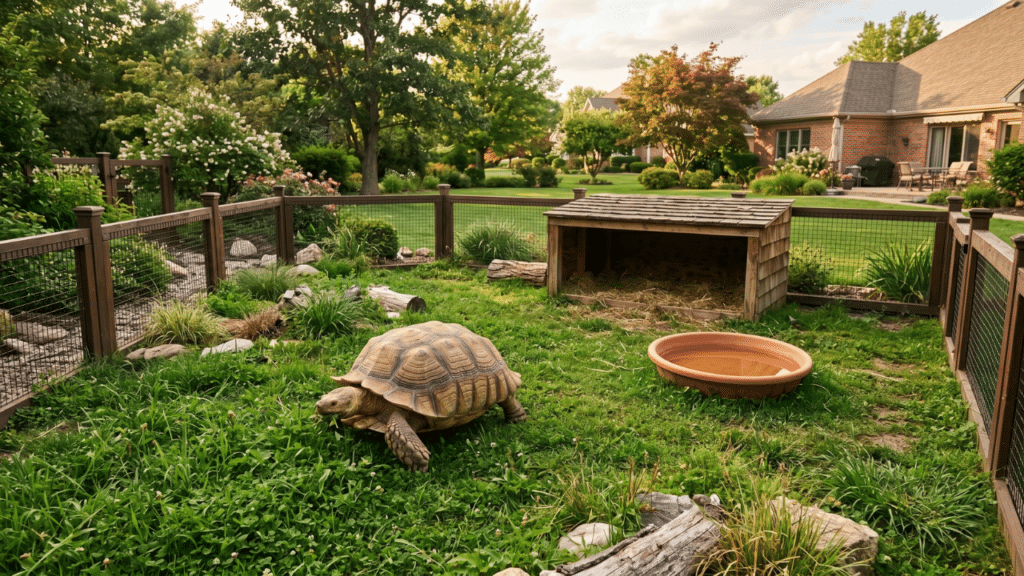
The outdoor enclosure — which most sulcatas transition into by age 2–3 — is typically the largest single expense in the first few years. A solid DIY build covering 200–300 square feet of enclosure space, a proper tortoise house, and correct perimeter footings realistically costs $1,500–$3,000 in materials. A contractor-built enclosure can run significantly higher.
From Year 3 onward, with outdoor grazing reducing food costs, annual expenses settle into a more predictable range: food and supplements at $600–$900 per year, vet at $75–$200 per year, enclosure maintenance at $50–$200 per year. That’s roughly $700–$1,300 per year in steady-state costs, or $7,000–$13,000 over years 3 through 10.
Ten-year total estimate, all in: $12,000–$20,000 for a sulcata started as a hatchling and properly housed through juvenile and early adult stages. This figure can be significantly higher with vet emergencies, enclosure upgrades, or climate conditions that require heated shelter infrastructure. It can be somewhat lower in warm climates with minimal shelter requirements and abundant natural grazing.
The 10-year number matters, but the 50-year number is the one that genuinely distinguishes sulcata ownership from most pet commitments. A sulcata that outlives its original owner isn’t unusual — it’s the expected outcome. Estate planning for a long-lived exotic animal is a real consideration that responsible sulcata owners address before it becomes an urgent one.
Where to Find a Reputable Sulcata Tortoise at a Fair Price
Reptile Expos and Shows
Regional reptile expos are one of the best places to find sulcata tortoises from reputable breeders at fair sulcata tortoise prices, while also being able to see the animals in person before committing. Major shows in states like California, Texas, Florida, and Arizona often feature multiple established sulcata breeders. You can compare animals, ask questions directly, and make an informed choice rather than relying on photos and descriptions from an online listing.
Online Reptile Marketplaces
Established reptile marketplace sites connect buyers with breeders across the country. These platforms vary in their vetting of sellers, so buyer due diligence remains essential. Look for sellers with established positive feedback histories, detailed animal descriptions, and clear photos of both the animal and its current housing. Request a live video call to see the tortoise moving and eating before finalizing any purchase.
Local Herpetological Societies
Local tortoise and reptile societies often maintain breeder and rescue referral networks, and their members tend to have strong community accountability. A recommendation from a local herpetological society is often a reliable path to a trustworthy source at a fair sulcata tortoise price, and the ongoing community connection is valuable for new owners navigating the learning curve of sulcata care.
Keeping Ongoing Sulcata Costs Manageable
The ongoing costs of sulcata ownership are real, but several of the largest recurring expenses can be meaningfully reduced with good planning.
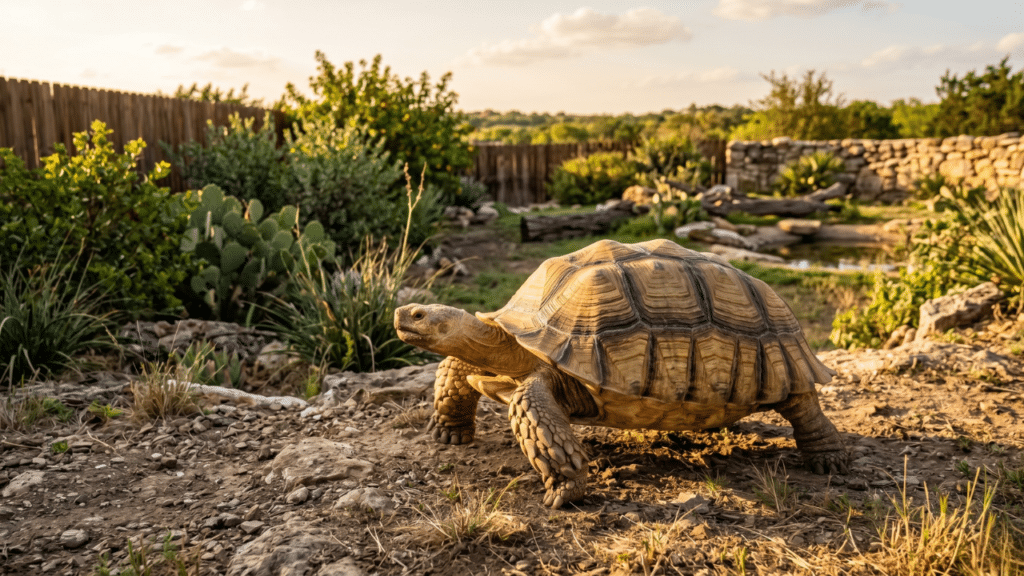
Food cost is the biggest variable. A sulcata with outdoor access to living, pesticide-free grass has its primary dietary need covered at essentially zero cost for most of the grazing season. The investment in a well-planted outdoor enclosure pays for itself in reduced food costs within a few years. Supplementing outdoor grazing with dandelion, hibiscus, and appropriate weeds from your own yard or garden further reduces the reliance on purchased greens.
Supplementation is a non-negotiable cost, but one that’s very manageable. Calcium powder and a quality mineral supplement used consistently and correctly — rather than sporadically or incorrectly — prevent the expensive health problems that result from nutritional deficiencies. Our Vitamin and Mineral Topper provides targeted trace mineral coverage specifically formulated for desert tortoise species at a fraction of what a single vet visit for a nutrition-related issue costs. Use code BUYNOWGET10 at checkout on Amazon to save 10%.
For hatchlings and juveniles — the stage where correct nutrition has the highest leverage on long-term health outcomes — our Baby Sulcata Superfood Powder (available in 2.5 oz and 4.5 oz sizes) provides the calibrated protein-to-fiber-to-calcium ratios that support correct shell development without the pyramiding risk that comes from overfeeding protein. Getting juvenile nutrition right reduces the likelihood of costly health interventions later.
Vet costs are the most unpredictable part of the ongoing sulcata tortoise ownership budget. Annual wellness exams ($75–$200) catch developing issues early and are significantly cheaper than treating advanced problems. Building a small emergency fund — $500–$1,000 set aside specifically for exotic animal vet costs — removes the financial pressure of an unexpected health event and allows you to get appropriate care promptly rather than delaying.
Is the Sulcata Tortoise Price Worth It? Honest Final Thoughts
The honest answer to whether the sulcata tortoise price — both purchase and lifetime cost — is worth it depends entirely on what you’re prepared for going in. For owners who understand what they’re committing to, have the space to house an adult animal correctly, and are genuinely interested in the long-term relationship with an extraordinary animal, sulcatas are deeply rewarding companions.
For owners who underestimate the space requirement, who plan to ‘figure out the enclosure later,’ or who are drawn primarily to the novelty of a giant tortoise without having researched the adult care commitment, the sulcata tortoise price is just the beginning of a series of escalating surprises. The sulcatas in rescues across the country — most of them surrendered by owners who started with exactly that mindset — are evidence of how that story typically ends.
The financial commitment is real: $1,500–$3,000 in the first year, $700–$1,300 annually ongoing, and a total 10-year investment of $12,000–$20,000 or more. If those numbers are within your means and you have the space and commitment to match them, the sulcata tortoise price is a fair exchange for one of the most remarkable pet relationships available to anyone willing to do it correctly.