
LIMITED-TIME OFFER
Give Your Baby Sulcata a Stronger Start—and Save 30%
Supporthealthy growth with a high-fiber, low-protein food formulated specifically for baby sulcatas. Superfood provides calcium, essential nutrients, and probiotics in an easy-to-serve powder.
GET 30% OFF SUPERFOODHerpetologist-formulated • Made in the USA
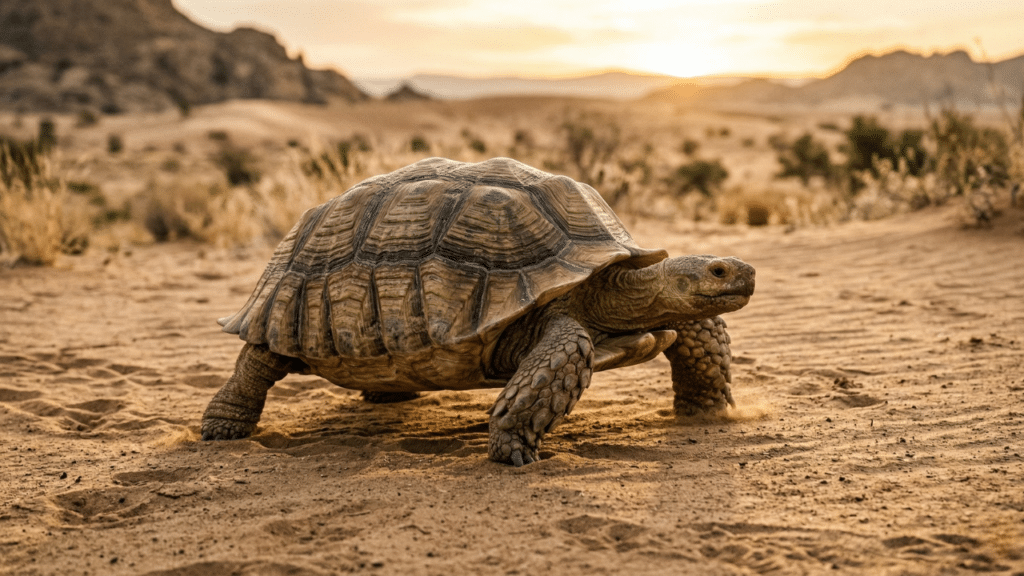
Sulcata tortoise size is one of the most searched questions in sulcata care — and one of the most important things to understand before acquiring one of these animals. The size trajectory of a sulcata is dramatic, predictable, and has direct implications for housing, diet, handling, and long-term planning at every stage.
But sulcata tortoise size isn’t just a number to prepare for. How your tortoise grows — the rate of that growth, the quality of shell development during it, and the nutritional conditions that drive it — determines the health and longevity of the adult animal far more than the final size itself. A sulcata that reaches 20 inches on a correct growth trajectory is a fundamentally different animal than one that reached the same size too fast on the wrong diet.
This guide covers sulcata tortoise size from hatchling to adult: a complete growth chart with shell length, weight, and healthy growth rates by age, what drives size variation between individuals, how to distinguish healthy growth from the rapid growth that causes lasting damage, the housing transitions each size stage requires, and what adult sulcata size means practically for daily care.
Sulcata Tortoise Size by Age: Complete Growth Chart
The table below provides sulcata tortoise size ranges across the full growth timeline, from hatchling through full adult. Shell length and weight figures represent healthy growth on a correct diet — not the inflated figures that result from overfeeding high-protein foods.
| Age | Shell Length | Weight | Healthy Growth Rate | Minimum Housing |
|---|---|---|---|---|
| Hatchling (0–3 months) | 1.5–2.5 in | 20–50 g | ~0.3–0.5 in/month | 4–6 sq ft indoor |
| 3–6 months | 2.5–4 in | 50–150 g | ~0.3–0.5 in/month | 6–8 sq ft indoor |
| 6–12 months | 4–6 in | 150–400 g | ~0.2–0.4 in/month | 8–12 sq ft indoor |
| 1–2 years | 6–9 in | 0.5–2 lbs | ~1.5–2.5 in/year | 15–25 sq ft; begin outdoor planning |
| 2–3 years | 8–12 in | 2–8 lbs | ~1–2 in/year | 25–40 sq ft; outdoor transition |
| 3–5 years | 10–15 in | 8–25 lbs | ~1–2 in/year | 50–80 sq ft outdoor |
| 5–10 years | 15–20 in | 25–60 lbs | ~0.5–1.5 in/year | 100–200 sq ft outdoor |
| 10–15 years | 18–25 in | 60–100 lbs | ~0.25–0.75 in/year | 200–300 sq ft outdoor |
| 15–20+ years (adult) | 20–30+ in | 80–150+ lbs | Slow — <0.5 in/year | 300+ sq ft outdoor (minimum) |
A few important notes on reading this table. First, these are ranges — individual sulcata tortoise size within any age bracket varies based on genetics, diet quality, temperature conditions, and sex. Males trend toward the upper end of most size ranges at maturity; females toward the lower. Second, healthy growth rates are slower than many owners expect. If your tortoise is consistently growing faster than the ranges shown, that is a signal to evaluate diet rather than a sign of thriving.
What Drives Sulcata Tortoise Size Variation?
Two sulcatas of the same age raised under similar conditions can end up meaningfully different in size, and understanding why helps owners interpret their own tortoise’s growth correctly.
Genetics and Bloodline
Genetic lineage is the primary driver of ultimate adult sulcata tortoise size. Some bloodlines consistently produce large animals — males reaching 28–30+ inches and 130+ pounds — while others produce smaller but equally healthy adults at 20–22 inches. This variation exists within the normal healthy range and is not a care problem. If you know the parentage of your sulcata, it provides the most reliable indication of where your tortoise’s adult size will fall.
Early Nutrition — The Most Controllable Variable
While genetics sets the ceiling, early nutrition determines how your sulcata grows toward it. The protein-to-fiber ratio in the diet during the first 18 months has a measurable effect on growth rate that cannot be fully corrected later. High-protein diets — too many leafy greens, legumes, or commercial foods not formulated for desert tortoise species — drive faster linear growth but produce softer, poorly mineralized bone and the pyramided shell scutes that are a permanent marker of incorrect early nutrition.
A grass-based diet with appropriate calcium supplementation from hatching produces slower, steadier growth with denser bone, harder shell, and a significantly better long-term health prognosis. The size difference between a correctly and incorrectly fed juvenile at age 2 may be only 1–2 inches of shell length — but the structural difference between those two animals is far greater than that number suggests.
Temperature and UVB
Sulcata tortoise size development requires adequate warmth and UVB exposure. Below their optimal temperature range, sulcatas metabolize food slowly and growth stalls regardless of what they’re eating. Inadequate UVB prevents proper vitamin D3 synthesis, which blocks calcium absorption regardless of how well you supplement — the result is soft shell and poor bone density at any growth rate. Consistently correct temperatures (basking zone 100–105°F, ambient 80–85°F) and a properly maintained UVB source are prerequisites for healthy sulcata tortoise size development at every life stage.
Sex
Male sulcata tortoises are significantly larger than females at maturity. The average adult male reaches 24–28 inches of shell length and 100–130+ pounds; the average adult female reaches 16–20 inches and 60–80 pounds. This sex-based size difference becomes apparent from around 5 years of age and becomes unmistakable by 8–10 years. The practical implication is that a male will require a larger enclosure, more food, and more physical infrastructure to manage than a female of the same age.
Are You Starving Your Tortoise?
Save 10% on premium tortoise food and supplements from Tortoise Resource Center on Amazon now using code BUYNOWGET10
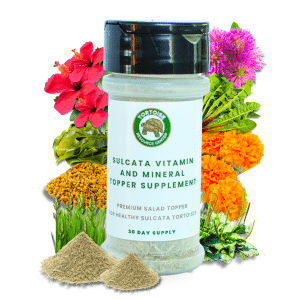
Sulcata Vitamin & Mineral Topper Supplement
30-Day Supply | 2 oz (56 g)
$24.99
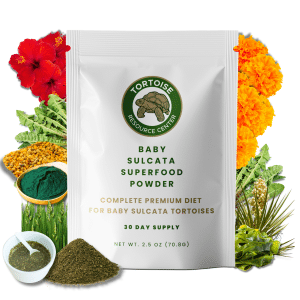
Baby Sulcata Tortoise Superfood Powder
30-Day Supply | 2.5 oz (70.8 g) Bag
$24.99
Healthy Sulcata Tortoise Growth vs. Rapid Growth: Why the Difference Matters
The most important thing to understand about sulcata tortoise size development is that faster growth is not better growth. This is where many well-meaning owners cause lasting damage to their tortoises — seeing rapid growth as a sign of thriving, when it is actually a sign of dietary overloading that produces short-term size at the cost of long-term structural integrity.
What Rapid Growth Actually Does
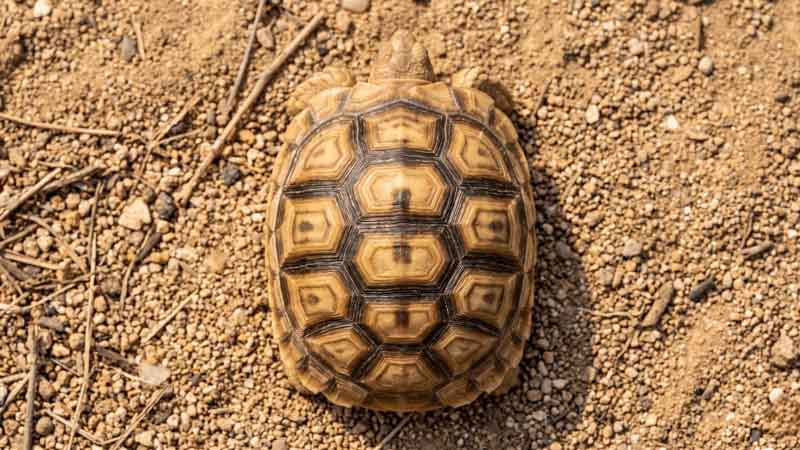
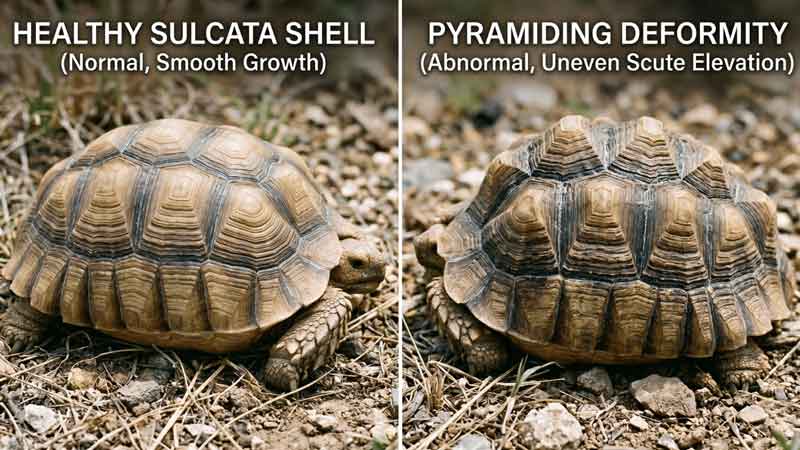
Shell pyramiding is the most visible consequence of rapid sulcata tortoise growth. When the scutes (the individual plates that make up the shell) grow faster than the underlying bone structure can properly support, they buckle upward rather than growing flat and smooth. The result is the raised, irregular surface pattern that’s unmistakable in photographs and impossible to reverse once established. A sulcata that reaches 12 inches of shell length by age 2 almost certainly has some degree of pyramiding; one that reaches the same size by age 3–4 on a correct diet typically does not.
Beyond the shell, rapid growth stresses the kidneys (which must process excess protein), creates bone density deficits (growth outpaces the body’s mineralization capacity), and places abnormal mechanical load on developing joints and limbs. Sulcatas that grow too fast in their first few years are consistently found to have shorter lifespans — often 30–40 years rather than the 70–80+ years that correctly grown animals achieve.
What Healthy Sulcata Tortoise Size Development Looks Like
Healthy growth is steady and measurable, but not dramatic. A correctly fed juvenile sulcata at 12 months should be roughly 4–6 inches of shell length — not the 7–9 inches that a high-protein diet might produce in the same period. The shell scutes should be flat and smooth, with clearly defined edges and no raised peaks. The shell should feel hard and solid when tapped gently; soft areas indicate calcium deficiency. Body weight should be proportional to shell size — a tortoise that is heavy relative to its shell length is often carrying excess fat stores from an overly calorie-dense diet.
Monthly measurement is the most practical way to track sulcata tortoise size development. A simple digital caliper measuring the straight carapace length (SCL) from front to rear of shell gives you a consistent, comparable number each month. If growth is exceeding the healthy range in the table above — particularly during the first two years — the primary levers to adjust are protein content (reduce leafy greens and any commercial foods, increase grass and hay) and total food volume.
The Role of Nutrition in Sulcata Tortoise Size and Shell Quality
Diet is the most powerful tool owners have for managing sulcata tortoise size development correctly. Getting the nutritional ratios right in the first 18–24 months produces compounding returns across the entire lifespan.
The dietary foundation is grass and hay — 75–90% of total intake. These provide the high fiber, low protein, low calorie profile that sulcata physiology is built around. Flowers, appropriate weeds, and limited vegetables fill the remaining 10–25%. This combination produces the slow, steady sulcata tortoise size progression that builds strong bone and flat, hard shell.
Calcium supplementation is non-negotiable throughout the growth period. Phosphorus-free calcium powder at every feeding for hatchlings, 5–6 times weekly for juveniles, supports the mineralization rate that healthy shell development requires. The ratio of calcium to phosphorus in the diet matters as much as the absolute calcium level — a diet high in phosphorus-containing foods (many vegetables, legumes) actively blocks calcium absorption regardless of how much calcium powder you add.
For baby and juvenile sulcatas during the critical early growth window, getting the protein-to-fiber-to-calcium balance precisely right is the single most impactful thing you can do for long-term sulcata tortoise size outcomes. Our Baby Sulcata Superfood Powder is formulated specifically to complement a grass-based diet with calibrated nutritional support at each growth stage — providing the trace elements and mineral balance that support correct shell formation without the protein overshooting that drives pyramiding. Available in 2.5 oz and 4.5 oz sizes.
Even with excellent fresh food variety, trace mineral gaps — selenium, zinc, magnesium, and vitamin A — are common in captive sulcata diets, particularly for indoor-kept animals without access to diverse outdoor grazing. These gaps affect shell quality and immune function in ways that aren’t always visible until a problem has developed. Our Vitamin and Mineral Topper fills those gaps with a 1–2 times weekly dusting on fresh food, complementing the grass foundation and calcium supplementation. Use code BUYNOWGET10 at checkout on Amazon to save 10% on either product.
Housing Transitions as Sulcata Tortoise Size Increases
One of the most practical implications of sulcata tortoise size is the series of housing upgrades it requires — and the timeline of those upgrades is faster than most owners initially plan for.
The Hatchling and Early Juvenile Stage (0–12 Months)
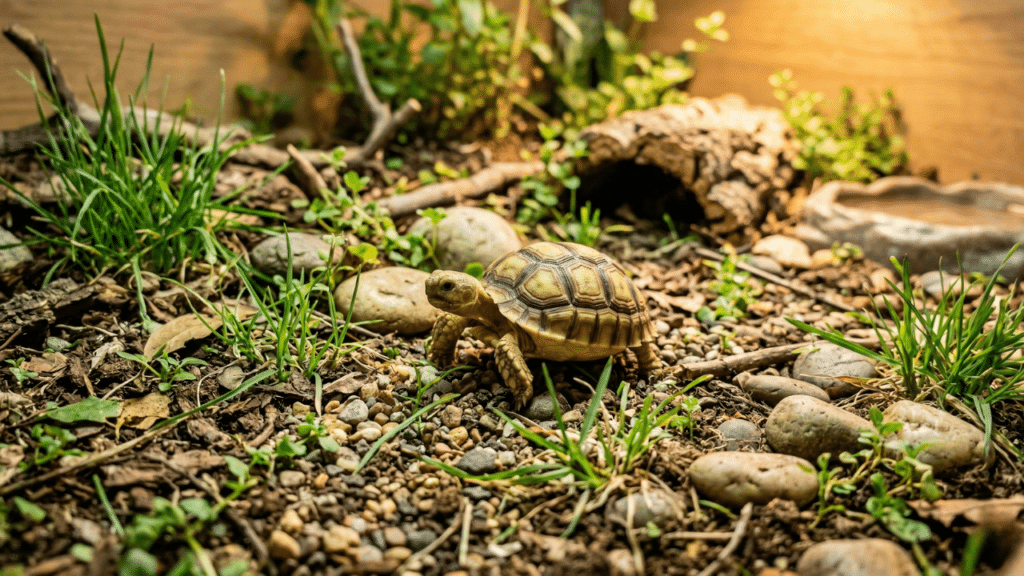
At hatchling size — 1.5 to 3 inches of shell length — a 4–8 square foot indoor enclosure is appropriate. A large plastic storage tote, a modified stock tank, or a purpose-built tortoise table all work at this stage. The key priority is maintaining correct temperature and UVB within a contained, manageable space. This setup will typically serve for the first 6–9 months before the tortoise outgrows it.
Plan the upgrade before it becomes urgent. A tortoise at 4 inches in a 4 square foot enclosure is already being housed at the absolute minimum — the next enclosure should be ready before that point, not after.
The Juvenile Transition (1–3 Years)
As sulcata tortoise size reaches the 6–12 inch range, indoor housing becomes genuinely challenging. The space required — 15–40 square feet — means a large custom-built enclosure or a dedicated room. This is the stage where most owners in appropriate climates begin transitioning to outdoor keeping, at least seasonally. Planning the outdoor enclosure during this stage rather than after the tortoise has outgrown every indoor option is the approach that avoids a housing crisis.
Sub-Adult and Adult Housing (3+ Years)
From 12 inches of shell length onward, outdoor housing is effectively the only practical option for most owners. The minimum of 50–80 square feet at the sub-adult stage and 150–300+ square feet at adult sulcata tortoise size requires dedicated outdoor space and proper construction — solid walls with underground footings, a heated shelter for cooler climates, and enough grass coverage to support meaningful grazing. Our outdoor enclosure build guide covers the construction details for each of these stages.
What Adult Sulcata Tortoise Size Means for Daily Care
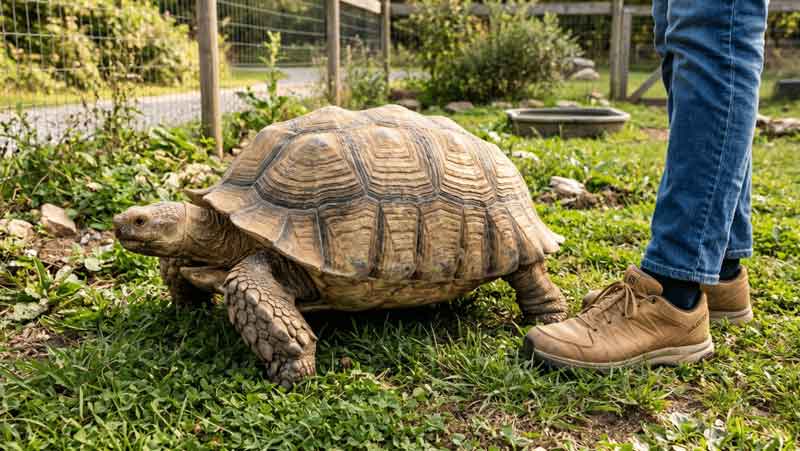
The practical implications of adult sulcata tortoise size extend beyond housing. A 100–150 pound animal changes the daily care calculus in ways that are worth understanding before that animal arrives at that weight.
Handling and Transport
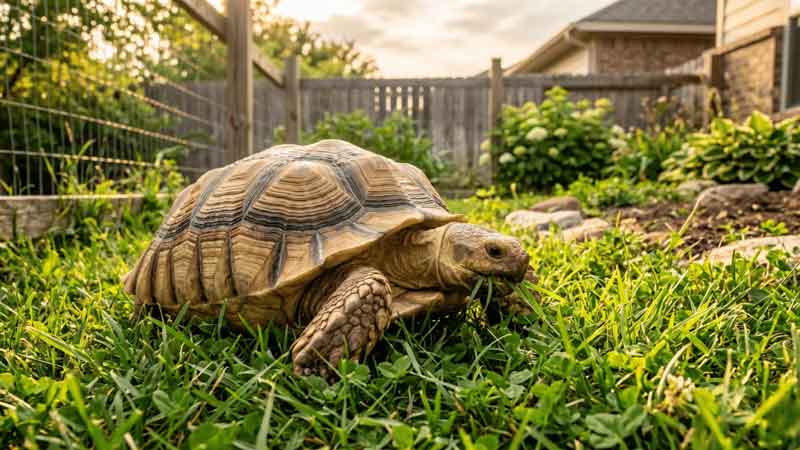
A sulcata under 20 pounds is manageable for one person to lift and transport. At 40–60 pounds, two people are needed for anything other than short repositioning. At 80–150 pounds, transport to a vet visit requires planning — a large, reinforced carrier (standard plastic dog kennels are not rated for this weight), a vehicle with appropriate cargo space, and at minimum two people to load and unload. Establishing a relationship with a reptile-experienced vet before your tortoise reaches this size — and confirming they can examine large chelonians — is practical planning that pays off when you actually need it.
Physical Impact on the Enclosure
A full-grown sulcata has remarkable strength for its size. Adults can push through fencing that isn’t properly anchored, displace rocks and enrichment objects that aren’t secured, compact substrate significantly in high-traffic areas, and create surprisingly deep impressions in outdoor soil. Enclosure infrastructure that is adequate for a 30-pound sub-adult needs to be assessed and potentially reinforced as the tortoise approaches and passes 80–100 pounds.
Food Volume
Adult sulcata tortoise size means adult food consumption. A fully grown sulcata grazing freely on a well-planted outdoor enclosure may consume several pounds of vegetation daily during active warm-weather periods. This is one of the strongest practical arguments for establishing living grass in the outdoor enclosure early — the alternative is sourcing, purchasing, and delivering equivalent volume of hay and supplemental greens daily, which adds up both in cost and in logistics.
Is Sulcata Tortoise Size Right for Your Life?
Understanding sulcata tortoise size across the full growth timeline is genuinely useful for making an honest pre-commitment assessment. The questions that matter are practical: do you have the outdoor space for an adult enclosure of 200–300+ square feet? Can you manage the physical demands of a 100+ pound animal for vet transport and enclosure maintenance over decades? Is your climate compatible with outdoor keeping, or does it require significant heated shelter infrastructure? Do you have a plan for the animal’s care if your own circumstances change?
None of these questions are reasons to avoid sulcata ownership — they’re reasons to go into it with clear eyes. Owners who have honestly assessed the space and practical implications of adult sulcata tortoise size, and who have the means to provide for it correctly, have one of the most rewarding exotic animal relationships available. The animal that a correctly raised, well-housed sulcata becomes at 20, 30, and 50 years old justifies the commitment — but only for owners who were genuinely prepared for it from the start.
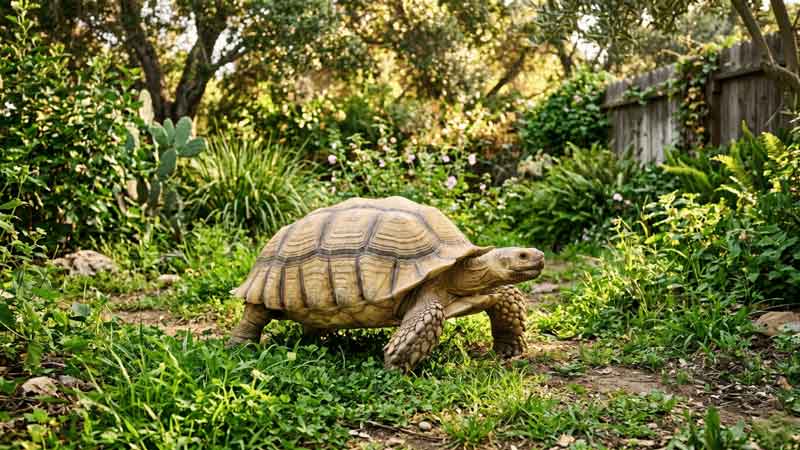
Supporting Healthy Sulcata Tortoise Size Development: Final Thoughts
The goal in managing sulcata tortoise size isn’t to maximize how big or how fast your tortoise grows. It’s to support steady, structurally sound development that produces a healthy, long-lived adult — flat shell, dense bone, well-functioning kidneys, and the behavioral engagement that comes from an animal that has been kept correctly from hatching.
That outcome starts with the right diet in the first months of life and is reinforced at every stage by consistent supplementation, correct temperature and UVB, adequate space, and the kind of careful monthly monitoring that catches a growth rate problem before it becomes a shell quality problem.