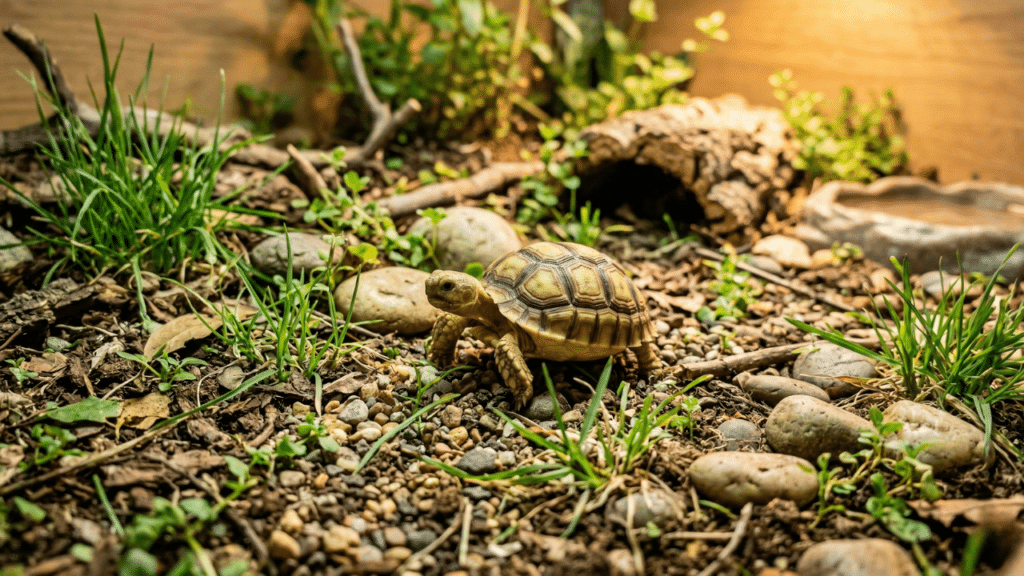
Baby sulcata growth is one of the topics new owners monitor most anxiously — and for good reason. The growth rate and shell development pattern in the first 24 months of a sulcata’s life has more influence on the animal’s long-term structural health than almost any other factor in its entire lifespan. Get early growth right and you build the foundation for a strong, flat-shelled adult with healthy kidneys and well-formed bones. Get it consistently wrong and the consequences — pyramiding, metabolic bone disease, organ stress — are permanent and often invisible until significant damage has already occurred.
The challenge is that most available guidance on baby sulcata growth either gives vague generalities (‘they grow fast’) or presents rigid benchmarks that don’t account for the individual variation, seasonal fluctuation, and environmental factors that make real-world growth rates messier than any single chart suggests. This guide gives you both: specific monthly targets to orient around, and the diagnostic framework to interpret your tortoise’s individual pattern against those targets. It also tells you exactly what to do when growth is off — not just that it’s a problem.
Why Baby Sulcata Growth Rate Matters More Than Adult Size
Before the numbers, the context: the goal of managing baby sulcata growth is not to achieve any particular size by any particular age. It is to achieve correctly structured growth — the kind where shell scutes calcify properly as they develop, where bone density matches the pace of linear growth, and where organ systems develop without being overloaded by excess protein throughput.
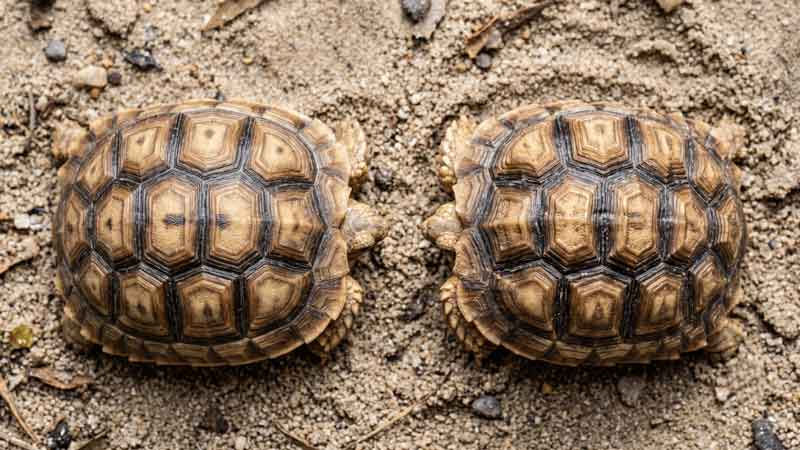
A baby sulcata that reaches 6 inches of shell length in 18 months on a correct diet is in a fundamentally different physiological state than one that reached the same size in 10 months on a high-protein diet. The second tortoise has been growing faster than its mineralisation rate can support. The scutes have been pushed upward rather than laid down flat — that’s what pyramiding is, mechanically. The kidneys have been processing more uric acid than they’re designed to at that age. The shell sounds different when tapped, feels different under the fingers, and looks different in photographs.
This is why ‘how fast should baby sulcatas grow?’ is the right question — but the right answer is always ‘steadily and correctly,’ not ‘as fast as possible.’ Slow, structurally sound baby sulcata growth beats fast, compromised growth every time, at every stage.
Baby Sulcata Growth: Month-by-Month Reference Table
The table below gives healthy weight ranges, shell length ranges, and expected monthly gains at each measurement point from hatch through 36 months. The concern threshold column identifies the specific values that warrant a diet or environment review — highlighted to make them easy to spot.
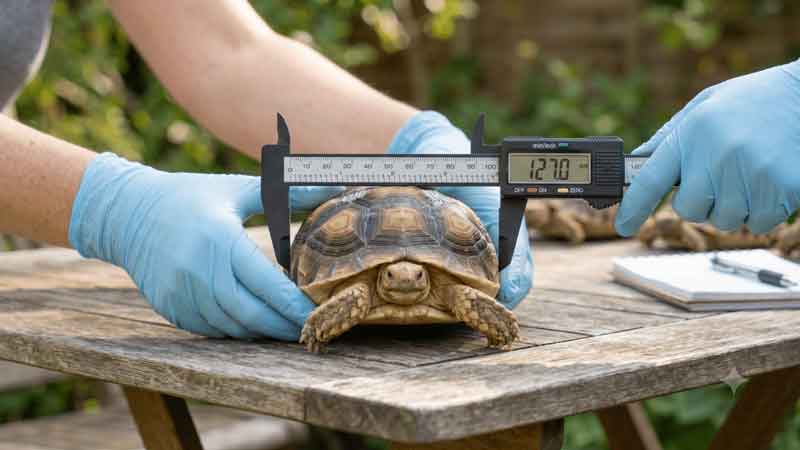
Measure weight with a digital scale accurate to 1 gram. Measure straight carapace length (SCL) with digital calipers from the front edge to the rear edge of the shell along the midline — not over the dome of the shell. Record both measurements on the same day each month.
| Age | Healthy Weight | Shell Length (SCL) | Monthly Wt Gain | Monthly SCL Gain | Concern Threshold |
|---|---|---|---|---|---|
| Hatch | 15–25 g | 1.5–2.5 in | — | — | Under 12 g or over 30 g — verify accurate scale |
| 1 month | 23–40 g | 1.7–2.8 in | 8–15 g/mo | 0.2–0.4 in | Gaining >20 g/mo — assess diet protein |
| 2 months | 31–55 g | 1.9–3.1 in | 8–15 g/mo | 0.2–0.4 in | No gain over 3 weeks — check temps and UVB |
| 3 months | 40–70 g | 2.1–3.4 in | 8–15 g/mo | 0.2–0.4 in | Shell soft or scutes beginning to raise |
| 6 months | 65–110 g | 2.5–4.0 in | 10–20 g/mo | 0.3–0.5 in | Over 130 g — probable overfeeding, reduce protein |
| 9 months | 110–180 g | 3.2–5.0 in | 15–25 g/mo | 0.3–0.6 in | Under 90 g — investigate diet, temperature, parasites |
| 12 months | 175–300 g | 4.0–6.0 in | 15–25 g/mo | 0.3–0.6 in | Over 350 g at 12 months — high pyramiding risk |
| 18 months | 300–520 g | 5.5–8.0 in | 20–35 g/mo | 0.4–0.7 in | Under 250 g — vet evaluation recommended |
| 24 months | 550–950 g | 7.0–10.0 in | 25–40 g/mo | 0.4–0.6 in | Over 1,100 g — review full diet and protein sources |
| 36 months | 1.0–2.5 kg | 9–13 in | 30–60 g/mo | 0.3–0.6 in | Sex differences begin to show; males trend larger |
Individual sulcatas will naturally fall at different points within these ranges, and some healthy tortoises will sit just outside them without any underlying problem. Use consecutive measurements — not a single data point — to assess growth patterns. One month below range is a prompt to check conditions. Three consecutive months below range is a prompt for action. A clear upward trend that’s consistently tracking above the healthy weight range is a diet signal regardless of whether the tortoise looks visually healthy.
The Four Baby Sulcata Growth Phases: What to Expect
Phase 1: The First Growth Surge (0–6 Months)
The first six months of baby sulcata growth are the most intensive period of the animal’s life. Hatchlings at 15–25 grams can triple in weight by the six-month mark under correct conditions. This growth is natural and appropriate — but it needs to be driven by the right fuel. The key word is ‘steady.’ A hatchling that doubles its weight in eight weeks on a grass-and-hay diet with appropriate supplementation is developing correctly. One that doubles in four weeks on a diet heavy in leafy greens and commercial foods is growing too fast on the wrong substrate.
Temperature is the single most impactful environmental variable during this phase. Baby sulcatas kept below their optimal thermal range (basking zone 95–100°F, ambient 83–88°F) metabolize food slowly and may show minimal growth regardless of diet quality. Before adjusting diet for slow growth in this phase, always verify and correct temperatures first.
Hydration is the second priority. Hatchlings are significantly more prone to dehydration than older tortoises and need a functional damp hide plus 2–3 soaks per week in shallow lukewarm water. Dehydration impairs gut motility, reduces nutrient absorption, and slows growth in ways that look like nutritional problems but are actually environmental ones.
Nutritional support during this phase should be targeted and species-appropriate. Our Baby Sulcata Superfood Powder (2.5 oz and 4.5 oz sizes) is formulated specifically for the nutritional demands of this first growth phase — providing the calibrated protein-to-fiber-to-calcium ratios that support correct shell mineralisation without the protein excess that drives pyramiding. Pair it with our Tortoise Calcium Topper at every feeding to ensure the mineral substrate for shell development is always available.
Phase 2: Sustained Growth (6–18 Months)
From six to eighteen months, baby sulcata growth continues strongly but the rate begins to stabilise slightly compared to the explosive early phase. Monthly weight gains of 10–35 grams and shell length gains of 0.3–0.7 inches per month are appropriate. This is also the phase where pyramiding most clearly develops or doesn’t — the pattern established in the shell scutes during this window is largely set by 18 months and cannot be undone.
Monthly monitoring becomes the most important care practice during this phase. Weigh and measure on the same day each month. If weight gain is consistently tracking in the upper third of the healthy range or above it, the protein-to-fiber ratio in the diet is too high — even if the tortoise looks fine, the shell may be showing early signs of raised scute development that a photograph will reveal before your eyes do. Take a consistent top-down photo of the shell each month alongside your measurements; this visual record is often more diagnostic than the numbers alone.
Supplementation during this phase transitions from the purely hatchling-focused profile toward a broader nutritional picture. Our Tortoise Daily Multivitamin Supplement a few times per week alongside continued Baby Sulcata Superfood Powder and Tortoise Calcium Topper provides the complete nutritional support profile for this critical sustained growth window.
Phase 3: The Transition Period (18–36 Months)
Baby sulcata growth rate slows noticeably as the tortoise approaches the two-year mark and begins its transition toward juvenile status. Monthly weight gains drop to the 25–60 gram range and shell length gains to 0.3–0.6 inches. This slowdown is natural and appropriate — owners who try to maintain the earlier growth rate through increased feeding at this stage are the ones who produce the heaviest three-year-olds with the worst shell quality.
This is the phase where the outdoor transition for most keepers begins or accelerates. A tortoise at 18–24 months in a warm climate can begin spending supervised time outdoors, with direct sun exposure providing UVB that no indoor bulb fully replicates and access to living grass that provides the best possible nutritional foundation for the transition phase.
As the tortoise moves through 24–36 months, nutritional needs shift from the intensive baby profile toward the juvenile range. Our Juvenile Sulcata Superfood addresses the adjusted protein-to-fiber ratios appropriate for this transitional stage, while our Vitamin and Mineral Topper provides the trace mineral coverage that becomes increasingly important as the diet expands to include more varied outdoor grazing.
Are You Starving Your Tortoise?
Save 10% on premium tortoise food and supplements from Tortoise Resource Center on Amazon now using code BUYNOWGET10

Sulcata Vitamin & Mineral Topper Supplement
30-Day Supply | 2 oz (56 g)
$24.99
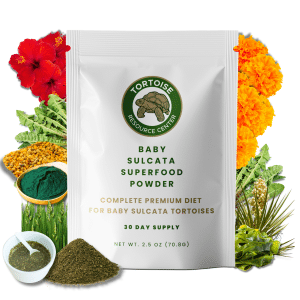
Baby Sulcata Tortoise Superfood Powder
30-Day Supply | 2.5 oz (70.8 g) Bag
$24.99
Phase 4: Early Juvenile (36+ Months)
By 36 months, most sulcatas have cleared the window where baby sulcata growth decisions have their highest impact. The shell quality established in the first 24 months is largely fixed. Growth continues at a reduced pace and the primary nutritional objective shifts from rate management to long-term structural support. Our Adult Sulcata Superfood begins to be appropriate for tortoises in this range as they transition through sub-adult toward adult nutritional requirements. Use code BUYNOWGET10 at checkout on Amazon to save 10% across all products.
What Rapid Baby Sulcata Growth Actually Does: The Mechanism
Understanding why rapid baby sulcata growth causes pyramiding — not just that it does — helps owners take dietary adjustments seriously even when the tortoise looks healthy and active.
Shell scutes grow from their margins outward and from their base upward. In correctly paced growth, new shell material is laid down at the margins at a rate that the underlying bone scaffold can mineralise properly before the next growth increment begins. The result is flat, dense, interlocked scutes.
In rapid growth driven by excess dietary protein, new shell material is produced faster than the mineralisation process can keep up with. The scute margins push outward and upward before the base layer is fully hardened. The result is the raised, peaked shape of pyramiding — the scute is literally growing faster at its edges than at its base, and the excess material buckles upward rather than lying flat.
This process is compounded by inadequate ambient humidity. In a dry environment, the keratin layer of the scute dries and stiffens faster than normal, further restricting the base layer from developing correctly as growth continues above it. This is why the combination of high protein diet and inadequate damp hide access is so consistently associated with pyramiding — both factors act on the same biomechanical failure mode from different directions.
The practical implication: pyramiding is not a cosmetic problem that shows up after the damage has been done. It is a real-time indicator of ongoing incorrect shell development. If you see it beginning — even subtle raising of scute edges in a 4-month hatchling — it is a signal to adjust diet and humidity immediately, not to wait and see. The earlier the correction, the better the outcome.
How to Diagnose and Correct Baby Sulcata Growth Problems
The table below gives specific diagnostic guidance for the five most common baby sulcata growth situations, including what’s most likely causing the problem and exactly what to do about it.
| Growth Situation | Most Likely Cause | Recommended Action |
|---|---|---|
| Growth consistently above range | Excess dietary protein or total caloric overload — often leafy greens, commercial foods, or vegetables forming too large a share of the diet | Shift diet to 80–90% grass and hay immediately. Remove all commercial tortoise pellets and vegetables for 4–6 weeks. Reintroduce greens at maximum 10–15% of total intake once growth rate normalises. Switch to Baby Sulcata Superfood Powder to replace ad-hoc supplemental foods with a correctly calibrated alternative. |
| Growth consistently below range | Insufficient food volume, temperatures too low for metabolic activity, inadequate UVB limiting D3 and calcium absorption, subclinical parasites, or underlying health issue | Verify basking spot reaches 95–100°F at substrate level. Check UVB bulb age — replace if over 6 months. Increase food volume by 20% for two weeks and reassess. If no response, fecal parasite test with a reptile vet. |
| Growth in range but shell pyramiding developing | Correct total growth rate but protein-to-fiber ratio too high, or ambient humidity too low (damp hide absent or inadequate) | Reduce protein further even if growth rate looks acceptable — pyramiding indicates the diet is driving abnormal shell calcification. Add or re-moisten damp hide. Increase grass and hay to 85–90%. Add Vitamin and Mineral Topper to support correct mineralisation. |
| Sudden growth pause (2–3 weeks, no gain) | Seasonal slowdown (autumn/winter), temporary temperature drop, or stress from handling, new environment, or illness | Check and correct temperatures first. If environmental conditions are correct and pause persists past 4 weeks with no appetite and lethargy, consult a vet. Seasonal pauses with normal appetite and activity are not concerning. |
| Weight gain without shell length increase | Excess caloric intake depositing fat without structural growth — visible as fat deposits around neck, front legs, and where limbs enter the shell | Reduce total food volume and eliminate any high-calorie items (vegetables, commercial foods). Focus on unlimited access to Timothy hay and limited fresh grass. Fat deposits are reversible with dietary correction. |
The Baby Sulcata Growth Monitoring Protocol
Consistent monitoring is what turns the reference table above from an abstract guide into a functional diagnostic tool for your specific tortoise. Here is the practical protocol.
Equipment
A digital kitchen scale accurate to 1 gram. Digital calipers for SCL measurement — available inexpensively and far more accurate than a ruler for small tortoises. A smartphone camera for monthly top-down shell photographs. A simple log — paper or digital — with columns for date, weight, SCL, photo reference, and any notes on diet or environment changes that week.
Measurement Schedule
Under 6 months: weigh weekly, measure SCL and photograph monthly. 6–18 months: weigh every two weeks, measure and photograph monthly. 18–36 months: weigh and measure monthly. The more frequent weighing in early months gives you faster feedback on growth rate trends before they become entrenched problems.
Reading Your Data
Plot weight over time. You’re looking for a consistent upward trend within the healthy range — not a perfectly smooth line, which doesn’t exist in real animals, but a general pattern that stays within the bounds of the reference table. A flat line for 3+ weeks triggers a temperature and environment check. A steep upward line that’s tracking above the healthy range triggers a diet protein review.
Compare SCL photographs month-to-month at consistent zoom level and angle. A top-down photo from directly above, with the shell filling most of the frame, is the most diagnostic view for early pyramiding assessment. Flat, smooth scute edges that reflect light evenly across their surface are correct. Any hint of raised centre points or uneven surface texture warrants attention.
Environmental Factors That Interact With Baby Sulcata Growth
Diet is the primary driver of baby sulcata growth rate, but it doesn’t operate in isolation. Three environmental factors have enough influence to meaningfully alter growth outcomes even when diet is correct.
Temperature is the most impactful. A correctly fed baby sulcata kept at suboptimal temperatures will grow slowly and show poor shell mineralisation, because the biochemical processes of digestion and D3 synthesis are temperature-dependent. The growth table targets assume correct thermal conditions — if temperatures are off, diet adjustments alone won’t correct the growth pattern.
UVB quality and age has the same dependency. A T5 HO tube that’s 8 months old may still appear to produce light but is providing minimal UVB. Since D3 synthesis (and therefore calcium metabolism) depends on UVB, an old bulb effectively decouples calcium intake from calcium absorption — the tortoise can be eating and supplementing correctly but still developing soft shell due to inadequate D3. Replace fluorescent UVB tubes every 6 months regardless of visible output.
Seasonal growth variation is real and normal. Baby sulcatas commonly show reduced growth rates during autumn and winter months even in consistently heated indoor enclosures. This is a natural biological rhythm and is not concerning if the tortoise is eating normally and temperatures are verified correct. Don’t respond to seasonal slowdowns by increasing food volume — this overrides a natural pattern and typically drives excess protein intake during the months when it does less good.
Supporting Correct Baby Sulcata Growth: A Complete Nutritional Framework
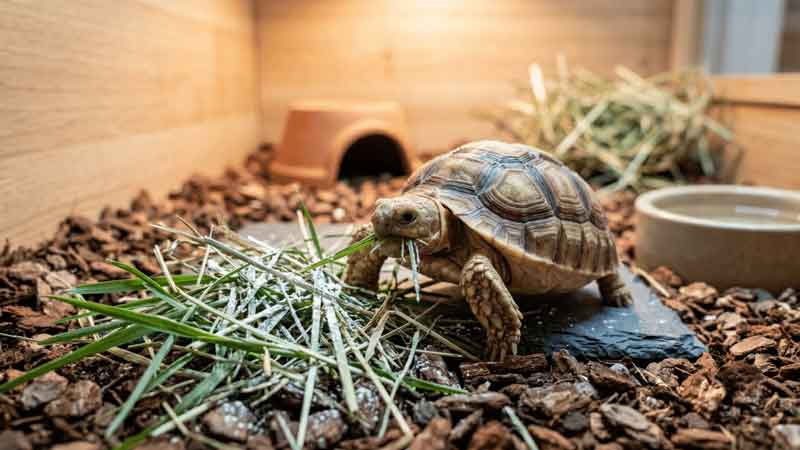
The dietary foundation for correct baby sulcata growth is grass and hay at 75–85% of total intake, with the remaining 15–25% coming from appropriate flowers, weeds, and the targeted supplementation that closes nutritional gaps the grass foundation alone doesn’t fully cover.
What that supplementation layer looks like in practice: Baby Sulcata Superfood Powder dusted on fresh food provides the calibrated species-specific nutritional foundation. Tortoise Calcium Topper at every feeding ensures consistent calcium availability for shell mineralisation. Tortoise Daily Multivitamin Supplement a few times weekly fills the vitamin A, D3, and E picture that fresh grass alone provides inconsistently. And Vitamin and Mineral Topper 1–2 times weekly addresses the trace mineral gaps — selenium, zinc, magnesium — that become more relevant as the tortoise grows and dietary variety expands.
This isn’t a complicated protocol — it’s a consistent one. The tortoises that develop the best shell quality are almost always the ones whose owners maintained a steady, routine supplementation approach from hatch rather than supplementing sporadically or relying on food variety alone to cover the nutritional picture.

Baby Sulcata Growth: What You’re Building Toward
Every weighing session, every monthly photograph, every dietary adjustment in response to a growth rate that’s trending too fast — this is all in service of a single outcome: a juvenile sulcata at 24 months with a flat, hard, properly formed shell, healthy bone density, and kidneys that haven’t been overstressed in their development.
That tortoise is set up for the decades ahead in a way that one raised on an incorrect diet simply isn’t. The shell quality established in the first two years is permanent. The organ health established in the first two years sets the baseline for the entire lifespan. The baby sulcata growth decisions you make now are the single most high-leverage intervention available in this animal’s 70-to-100-year life.