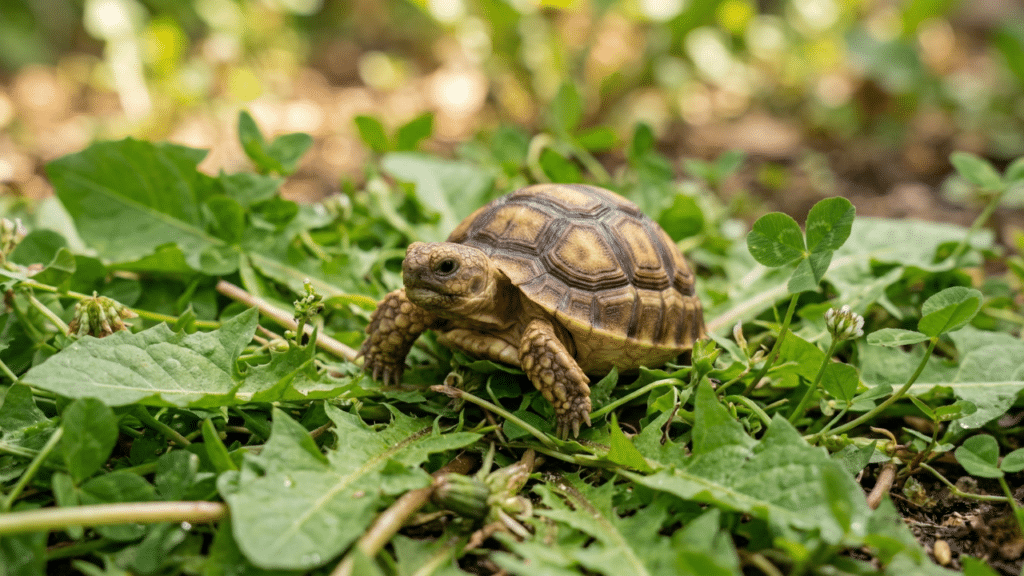
A picky sulcata tortoise is one of the most frustrating things a keeper can face. You’ve sourced good food, you know what they should be eating, and they simply won’t. They bulldoze past the dandelion greens, ignore the collard leaves, and either stare at you expectantly or disappear into their hide. Meanwhile you’re watching the days tick by wondering whether your tortoise is getting enough nutrition.
Here’s the thing most guides on picky sulcata eating miss: the food itself is rarely the root cause. Selective eating in sulcatas is almost always a symptom of something else — the wrong temperatures, the wrong humidity, stress from handling or environment changes, a learned preference from early feeding mistakes, or an underlying health issue that’s suppressing normal appetite. Treating picky eating as a food problem when it’s actually an environmental or health problem is why so many feeding interventions fail.
This guide works through the causes systematically before it gets to solutions — because the right fix depends entirely on what’s actually driving the behavior in your individual tortoise. It also gives you a clear framework for knowing when picky eating is a minor management challenge versus when it’s a signal that requires a veterinarian.
Why a Sulcata Tortoise Becomes a Picky Eater
Understanding what’s behind the behavior is the most important step toward resolving it. A picky sulcata tortoise is not being difficult for its own sake — it’s responding to one of several identifiable drivers, and each one calls for a different approach.
Evolutionary Preference for Energy-Dense Foods
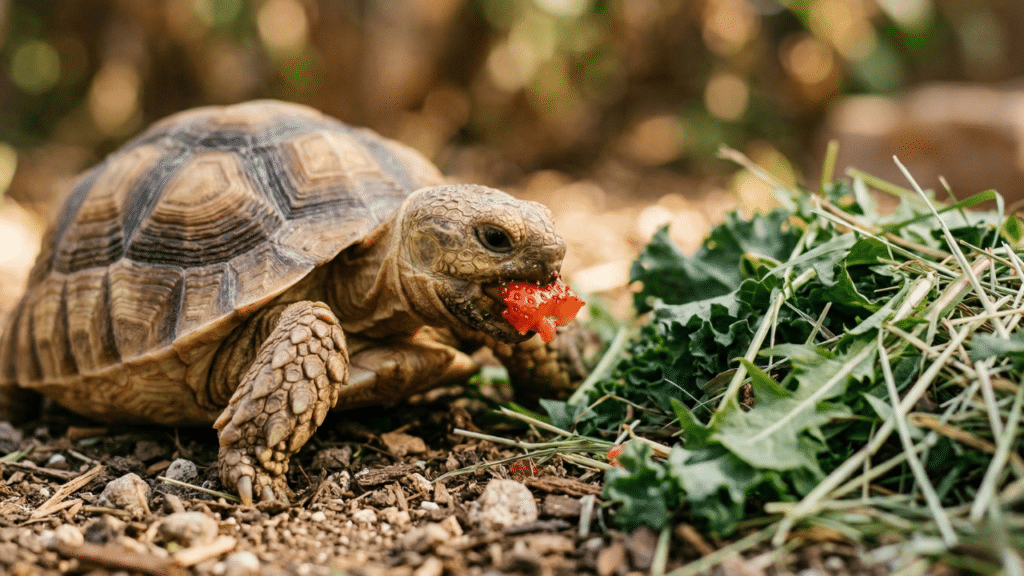
Sulcatas evolved in an environment where food was often scarce and unpredictable. Their brains are wired to seek out the sweetest, most calorie-dense options available — a survival advantage in the Sahel that becomes a management problem in captivity when fruit or high-moisture vegetables are on offer alongside appropriate grasses. When a sulcata fixates on fruit and rejects greens, it isn’t being irrational. It’s doing exactly what millions of years of evolution trained it to do. The keeper’s job is to work with that instinct rather than against it.
Learned Food Preferences from Early Feeding
Sulcatas have long memories for food experiences, and preferences established in the hatchling and juvenile phases tend to persist. A tortoise that was fed primarily fruits, commercial pellets, or a narrow range of greens in its first year will often show strong resistance to foods it wasn’t exposed to during that window. This isn’t permanent — dietary retraining is possible — but it requires patience and a specific approach, not just offering the rejected food more insistently.
Environmental Conditions That Suppress Appetite
This is the most commonly overlooked cause of picky eating and the one that wastes the most keeper effort when it goes undiagnosed. A sulcata that isn’t warm enough cannot digest properly. Its body suppresses appetite as a physiological response to the inability to process food effectively. When this happens, the tortoise may show interest in very high-value foods like fruit — because the caloric reward is high enough to override the suppression signal — while rejecting normal greens and grasses entirely. If your picky sulcata will eat fruit but nothing else, check your temperatures before you change anything about the diet.
Low humidity has a similar effect, particularly in younger animals. A chronically dehydrated tortoise often shows reduced appetite and heightened selectivity, gravitating toward high-moisture foods because their body is using food as a hydration source.
Stress-Driven Selectivity
Chronic low-level stress — from excessive handling, enclosure-mates, predator presence (even the smell of a dog or cat), or frequent environmental disruptions — suppresses appetite in sulcatas just as it does in most animals. A stressed tortoise often maintains interest in the most palatable, energy-dense foods while dropping everything else from its diet. If the picky eating coincides with a change in living situation, a new animal in the home, a move, or a change in keeper routine, stress is a serious candidate.
Health-Related Appetite Suppression
Selective or reduced eating is often one of the earliest visible signs of illness in sulcatas, appearing before more obvious symptoms develop. Respiratory infections reduce the sense of smell that drives food interest. Parasites alter gut chemistry and appetite signals. Dental or beak irregularities make certain textures painful. Any picky sulcata tortoise that was previously a reliable eater and has suddenly become selective warrants a health assessment, not just a feeding intervention.

Are You Starving Your Tortoise?
Save 10% on premium tortoise food and supplements from Tortoise Resource Center on Amazon now using code BUYNOWGET10

Sulcata Vitamin & Mineral Topper Supplement
30-Day Supply | 2 oz (56 g)
$24.99

Baby Sulcata Tortoise Superfood Powder
30-Day Supply | 2.5 oz (70.8 g) Bag
$24.99
Diagnosing Your Picky Sulcata Tortoise: A Pattern-Based Guide
Before selecting a strategy, identify which pattern best describes your tortoise’s behavior. The cause — and therefore the right approach — differs significantly depending on the specific pattern.
| Behavior Pattern | Most Likely Cause | First Step |
|---|---|---|
| Eats fruit eagerly, ignores greens and grass | Learned preference + evolutionary instinct | Eliminate fruit entirely; review temperatures |
| Was eating well, now suddenly selective | Health issue or environmental change | Veterinary check; review all enclosure parameters |
| Eats outdoors but refuses food indoors | Temperature or lighting inadequacy indoors | Measure actual basking temp at tortoise level |
| Accepts some greens, refuses others consistently | Texture or flavor aversion from early exposure | Progressive introduction method (see below) |
| Reduced appetite in cooler months | Seasonal metabolism slowdown | Ensure enclosure temps are consistent year-round |
| Food interest present but not eating | Stress or early illness | Reduce handling; assess for illness signs |
| Eats fine from one keeper, not another | Stress response to unfamiliar interaction | Consistent handling approach; minimize disruption |
When a Picky Sulcata Tortoise Needs a Vet, Not a Feeding Strategy
Not all picky eating is a behavioral management problem. Some patterns require professional assessment before any feeding intervention is appropriate — and attempting to force dietary change while an underlying health issue is active can cause genuine harm.
Contact a reptile veterinarian promptly if your tortoise shows any of the following:
- Complete food refusal — no food intake at all — for more than 48–72 hours in a hatchling or juvenile under 12 months. Young tortoises do not have the metabolic reserves to fast safely.
- Any food refusal lasting more than 5–7 days in a juvenile or adult, especially if accompanied by weight loss.
- Sudden selective eating in a tortoise that was previously a reliable, varied eater — this pattern is more often illness than behavior.
- Physical symptoms alongside reduced eating: nasal discharge, audible breathing, puffiness around the eyes or limbs, lethargy at warm temperatures, or abnormal waste.
- Weight loss exceeding approximately 10% of body weight over a short period regardless of the eating pattern.
If none of these apply and your tortoise is maintaining weight, active, and eating at least some foods, you are dealing with behavioral pickiness that is addressable through the strategies below.
Fix the Environment Before You Fix the Diet
This is the step most feeding guides skip, and it’s the one that matters most. If your picky sulcata tortoise’s environment isn’t right, dietary interventions will at best produce partial results and at worst mask a problem that needs to be addressed directly.
Temperature — The Most Common Hidden Culprit
Verify your basking temperature with a temperature gun or a probe thermometer placed at the surface of the basking spot at tortoise shell height — not positioned nearby or mounted on the enclosure wall. Ambient air temperature and surface basking temperature can differ by 10–15 degrees, and a thermometer in the wrong place gives you false confidence.
For a sulcata showing selectivity or reduced appetite, the basking spot should reach 95–100°F, with a genuine cool end of 75–80°F available. If the cool end is too cold — below 70°F — the tortoise may avoid it and consequently overheat in the basking zone without the ability to properly thermoregulate. Both extremes suppress appetite.
Humidity
A picky sulcata that gravitates strongly toward high-moisture foods — fruit, cucumber, watery vegetables — is often doing so because it is using food as its primary source of hydration. If your enclosure is running below 50% humidity during active daytime hours, address that before adjusting the diet. A properly hydrated tortoise shows dramatically more interest in appropriate dry foods like grasses and hays.
Daily soaking for hatchlings and juveniles (10–15 minutes in shallow lukewarm water) addresses dehydration directly and often noticeably improves food acceptance within a few days of consistent implementation.
Stress Factors
Walk through this checklist before concluding the pickiness is dietary:
- Has anything changed in the tortoise’s environment in the weeks before the selective eating started? A new animal in the home, a moved enclosure, a change in keeper schedule, construction nearby?
- Is the tortoise being handled frequently? Reduce handling to essential health checks only during a feeding reset.
- Does the enclosure have adequate hiding space — at least two hides of different types? A tortoise that cannot retreat and feel secure is a stressed tortoise.
- Are enclosure walls opaque? Sulcatas can detect and react to their own reflection, causing persistent low-level territorial stress.

Strategies for the Most Common Picky Sulcata Tortoise Patterns
The Fruit-Addicted Tortoise
This is the most common picky eating pattern and one of the most nutritionally dangerous. A sulcata subsisting primarily on fruit is receiving excessive sugar, inadequate fiber, low calcium relative to phosphorus, and none of the complex plant compounds that healthy grasses and leafy greens provide. The approach is structured reduction, not cold turkey.
- Remove fruit from the diet entirely for at least two weeks. Yes, the tortoise may refuse to eat for several days. For a healthy adult, this is safe and necessary. For a juvenile, monitor daily and have a veterinarian on call if refusal extends beyond five days.
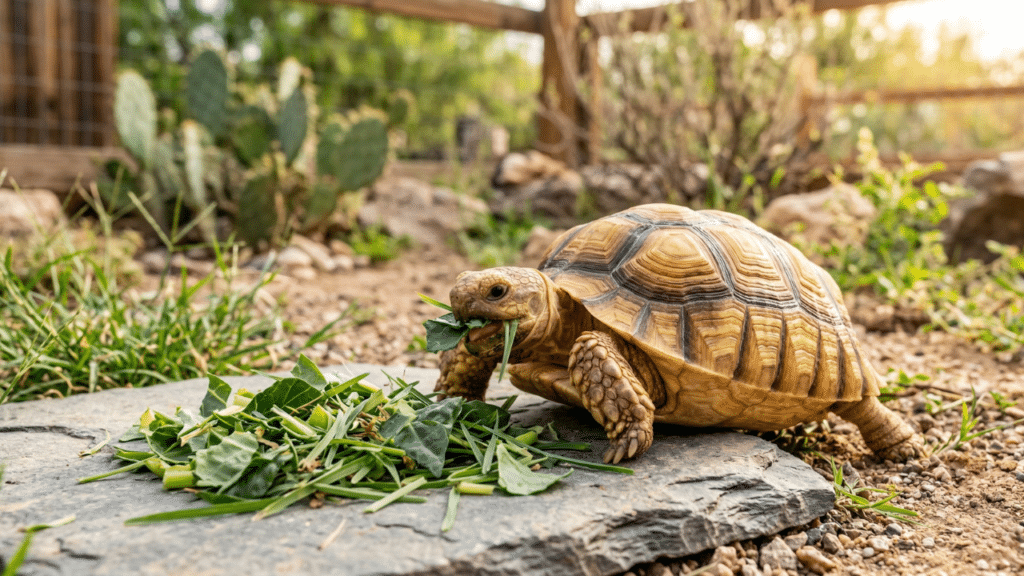
- During the fruit-free period, offer a wide variety of appropriate foods — dandelion greens, collard greens, mustard greens, young alfalfa, fresh clover, bermuda grass — presented in different ways. Scatter foods across the enclosure to encourage natural foraging movement rather than presenting everything in one dish.
- Once the tortoise is eating greens and grasses reliably — which typically happens within one to three weeks for most individuals — fruit can return as an occasional treat in very small quantities, offered after appropriate foods have been consumed rather than as a daily component of the diet.
The most common mistake with fruit addiction is inconsistency. A tortoise that refuses appropriate foods for two days and then receives fruit “just this once” has learned that refusal is an effective strategy. Consistency during this reset period is essential.
The Texture or Flavor Avoider
Some sulcatas develop firm aversions to specific textures or flavors — often foods that were absent from their early diet or associated with a negative experience. The most effective approach is progressive introduction: using accepted foods as a vehicle for rejected ones, in proportions small enough that the tortoise doesn’t notice the addition.
- Week 1–2: Identify a reliable gateway food — something the tortoise eats consistently and eagerly. Mix in a very small amount (5–10% of the meal by volume) of the target food, finely chopped or shredded so it integrates visually with the accepted food.
- Week 3–4: If the tortoise is eating the mix without sorting or rejecting it, increase the proportion of target food to 20–25% of the meal.
- Week 5–8: Continue shifting the ratio gradually. Most texture and flavor aversions can be overcome with 6–10 weeks of consistent progressive exposure.
Do not rush the ratio shift. A tortoise that detects and rejects the introduced food resets the process and becomes more wary of similar attempts. Slow and undetected is far more effective than fast and obvious.
The Seasonal or Metabolism-Related Refuser
Many sulcatas, particularly those in indoor setups with imperfect temperature control, show reduced appetite and increased selectivity during cooler months. This is a metabolic response, not a behavioral problem. The digestive system slows, appetite signals diminish, and the tortoise gravitates toward the most calorie-dense options available.
The fix is environmental, not dietary. Ensure enclosure temperatures remain consistent year-round with a functioning heat source and a thermostat. A tortoise in a properly heated indoor environment should not show significant seasonal feeding variation. If yours does, the enclosure is experiencing temperature fluctuations that aren’t being captured by ambient readings.
The Suddenly Selective Previously-Good Eater
Rule out health issues first — this pattern is more often an early symptom of illness than a behavioral change. If a veterinary check comes back clear, review every environmental parameter with fresh eyes: test the actual basking temperature with a probe rather than relying on mounted thermometers, check UVB bulb age and output, assess humidity at substrate level, and look for any recent environmental changes that might not have seemed significant at the time.
Supporting Nutrition in a Picky Sulcata Tortoise During Dietary Transitions
When you’re working through a feeding reset with a picky sulcata tortoise, the dietary period before full variety is established is a nutritional gap that’s worth addressing directly. A tortoise eating a narrow range of foods is almost certainly missing micronutrients, and the stress of the transition itself increases demands on the immune system.
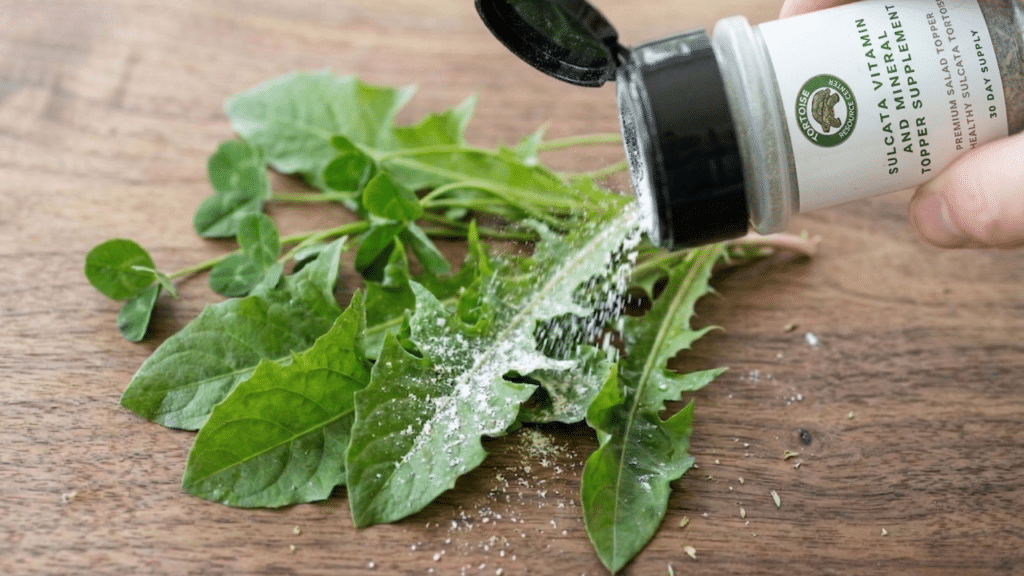
The most practical approach is to supplement whatever foods the tortoise will currently accept rather than waiting until the diet is fully corrected. A light dusting of a quality supplement over the foods your tortoise is eating ensures that even during the transition, the nutritional baseline is covered.
The Baby Sulcata Superfood Powder (4.5 oz) works well here — it’s specifically formulated for sulcatas and can be dusted lightly over whatever your tortoise is currently accepting, providing the amino acids and micronutrients that a limited diet leaves out. The 2.5 oz option is a practical starting size. For adult sulcatas working through a picky eating phase, the Vitamin and Mineral Topper covers the trace minerals, B vitamins, and fat-soluble vitamins that a restricted diet typically misses. Applied consistently during the transition, it closes the nutritional gap without requiring the diet to be perfect before supplementation starts. Use code BUYNOWGET10 for 10% off.
Food Presentation Techniques That Improve Acceptance
How food is offered matters more than most keepers expect. Sulcatas are visual foragers in the wild — they scan their environment for food items and investigate them based on color, movement, and contrast with the substrate. Presenting food in ways that engage those instincts improves acceptance rates, particularly during a dietary transition.
Scatter Feeding
Rather than placing food in a single dish, scatter it across the enclosure floor. This triggers natural foraging behavior — the tortoise moves through its space, encounters food items, investigates and eats them. Tortoises fed this way often consume a wider variety than when food is presented in a concentrated pile, likely because the movement and discovery mimic the way they encounter food naturally.
Color as a Gateway
Sulcatas show stronger visual interest in brightly colored foods. Use this strategically: arrange colorful, accepted foods — hibiscus flowers, orange squash pieces, bell pepper — alongside or intermixed with the less visually interesting greens and grasses you’re trying to introduce. The tortoise investigates the color and encounters the target food in the process. Over time, the association shifts.
Temperature of Food
Food offered at room temperature or slightly warmed is more appealing than cold food straight from a refrigerator. The scent compounds that drive food interest in sulcatas are more volatile at higher temperatures — a slightly warm plate of dandelion greens is more olfactorily interesting than a cold one. This is a small adjustment that costs nothing and improves acceptance noticeably for some individuals.
Feeding Location and Routine
Sulcatas are creatures of routine. Feeding in a consistent location at a consistent time each day builds a conditioned expectation that makes them more ready to investigate and eat when food appears. Frequent location changes or erratic feeding schedules can reduce food acceptance in sensitive individuals, particularly during a dietary transition.
Realistic Timeframes for a Picky Sulcata Tortoise Recovery
One of the most important things to calibrate when working with a picky sulcata tortoise is your timeline expectation. The strategies above work — but they work over weeks and months, not days. Keepers who expect quick results often abandon effective approaches before they have time to produce results, or reintroduce preferred foods too early and reset the process.
- Environmental corrections (temperature, humidity, stress reduction) typically produce noticeable improvement in appetite and food acceptance within 1–2 weeks once changes are made. If you’ve corrected an environmental issue and see no improvement after two weeks, look deeper.
- Fruit addiction recovery through structured reduction takes 3–6 weeks for most tortoises, with the first 1–2 weeks being the hardest. Some individuals with very deep-seated preferences may take up to 3 months to reliably eat appropriate foods without fruit present.
- Progressive introduction of rejected foods typically requires 6–10 weeks of consistent effort to achieve reliable acceptance. Individual variation is significant — some tortoises accept new foods quickly, others resist for months.
- Completely overhauling a diet that was inappropriate from early life — the tortoise that has eaten primarily fruit and commercial pellets for years — is a long-term project measured in months. Expect setbacks, particularly during stress events or illness, and treat each regression as a reset point rather than a failure.
Preventing Picky Eating from Returning
A sulcata that has gone through a successful dietary reset is not necessarily a sulcata that will maintain those habits without continued management. The evolutionary preference for sweet, energy-dense foods doesn’t disappear — it’s managed by maintaining an environment where inappropriate options aren’t available and appropriate foods are presented consistently.
- Maintain dietary variety permanently. A tortoise eating the same narrow range of appropriate foods week after week can develop aversions to those foods over time. Rotate greens, grasses, and occasional vegetables to keep the diet diverse and prevent any single food from becoming associated with monotony.
- Do not reintroduce fruit as a regular component of the diet after a fruit addiction reset, even when the tortoise appears to be eating well. Reserve it as a genuine occasional treat offered no more than once or twice a month, and always after appropriate foods have been consumed.
- Maintain optimal environmental conditions consistently rather than treating them as something to check only when problems arise. A sulcata in a correctly heated, humidified enclosure with adequate hiding space maintains better appetite and food acceptance than one in a borderline environment, and is far more resilient to the temporary disruptions that would trigger picky eating in a less well-supported animal.
- Watch for early signs of returning selectivity — a tortoise leaving specific foods consistently or showing renewed interest in rejected preferred foods — and address them promptly before the pattern becomes entrenched again.
A Picky Sulcata Tortoise Is Usually Telling You Something
The keepers who resolve picky eating most successfully are the ones who treat it as diagnostic information rather than a behavior to overcome. A picky sulcata tortoise is almost always responding to something in its environment, its history, or its health — and identifying that something is the most efficient path to a resolution.
Start with the environment. Verify temperatures with a probe, assess humidity at substrate level, evaluate stress factors, and rule out health issues before concluding that the problem is purely about food preferences. In the majority of cases, that investigation reveals the actual cause — and fixing the actual cause produces results that no amount of food manipulation alone would have achieved.
When the environment is genuinely right and the pickiness is learned or behavioral, the strategies in this guide work. They require consistency, patience, and a realistic timeline — but a picky sulcata tortoise is not a permanent condition. It’s a management challenge with real solutions.
During any dietary transition, keeping your sulcata nutritionally covered on whatever it will accept is straightforward with a quality supplement. The Baby Sulcata Superfood Powder (available in 4.5 oz and 2.5 oz) and the Vitamin and Mineral Topper can both be dusted over accepted foods to bridge nutritional gaps while the diet is being corrected. Available on Amazon — use code BUYNOWGET10 to save 10%.