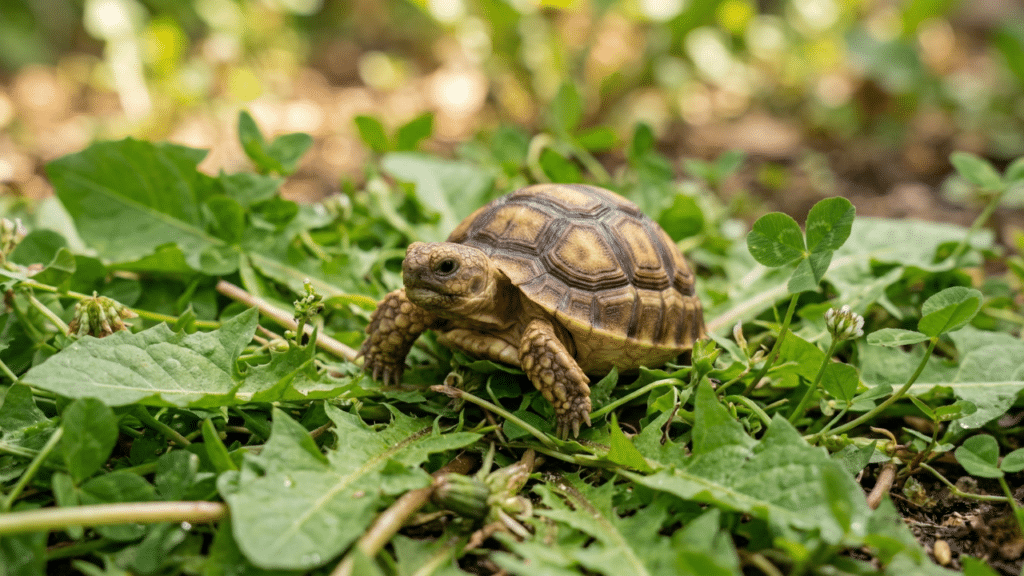
If you’re raising a baby sulcata tortoise, you’ve probably already figured out that tossing some lettuce in their enclosure isn’t going to cut it. Baby sulcata nutrition is more specific, more consequential, and more different from adult feeding than most care guides prepare new keepers for — and getting it wrong in the first year can cause problems that genuinely cannot be fixed later.
That’s the honest starting point. The shell your hatchling builds in the next twelve months, the bone density it accumulates, the gut microbiome it establishes — all of it is being constructed right now, and diet is the primary input. The nutrition window in the first 6 to 12 months is the single most important investment you’ll make in your sulcata’s entire life.
This guide walks through every dimension of baby sulcata nutrition in the order that matters: why the dietary rules are genuinely different from adults, what to feed and in what proportions, what to avoid and why, how protein and supplementation actually work, the hydration practices most keepers underestimate, and how to read your tortoise’s body as real-time feedback on whether your approach is working. The video below covers the core feeding guide in around five minutes — the written sections below it go deeper on every point.
Why Baby Sulcata Nutrition Is Genuinely Different from Adult Feeding
Baby sulcatas are not simply small adults with the same needs scaled down. In their first year alone, a healthy hatchling can increase its body weight by 500 percent or more. Their bones are developing, their shells are hardening, their organs are maturing, and their digestive systems are still learning to process plant matter. What works nutritionally for a full-grown sulcata can actually harm a hatchling — the rules are genuinely different, not just slightly adjusted.
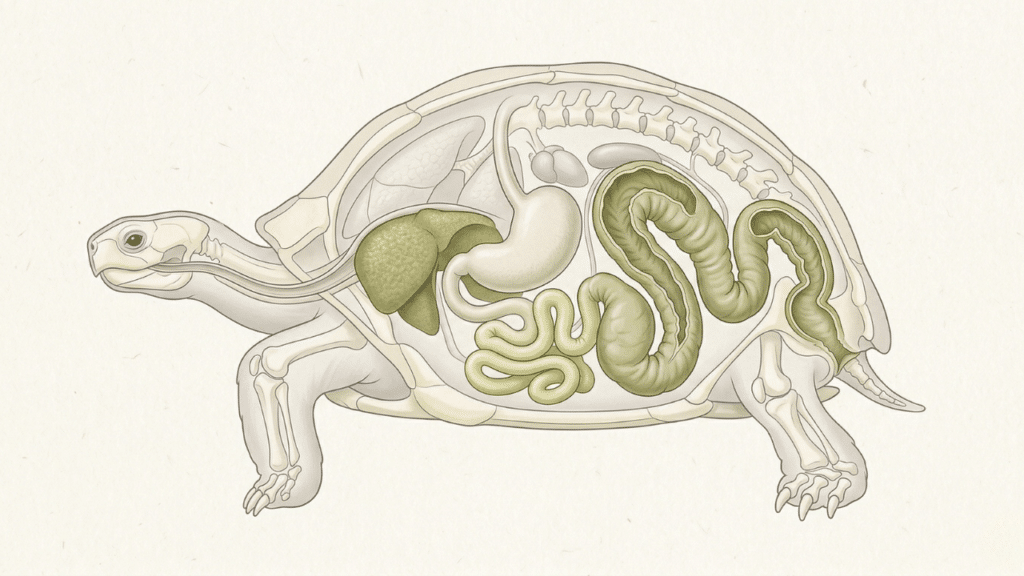
The key piece of biology to understand here is that sulcatas are hindgut fermenters. They rely on bacteria in their large intestine to break down complex plant fiber and extract nutrients. In adult tortoises, those bacterial colonies are mature and highly efficient — they can extract significant nutrition from tough, coarse, fibrous grasses that are relatively low in nutritional density. In baby sulcatas, those bacterial colonies are still establishing themselves. The gut microbiome is a work in progress.
This is why hatchlings need softer, more digestible plant material with higher nutritional density — not the mature dry grasses that adult sulcatas thrive on. Their digestive system simply isn’t ready for that level of complexity yet. It’s also why any care sheet written for adult sulcatas is the wrong starting point for a keeper raising a hatchling.
Baby Sulcata Nutrition: The Core Diet and Why the Ratios Matter
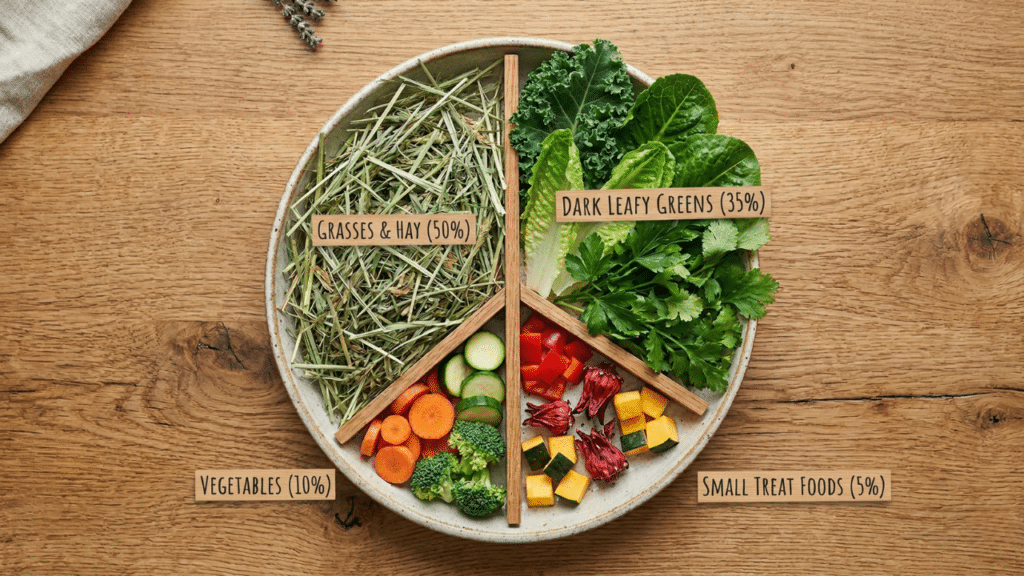
There are four food categories in a well-structured baby sulcata diet, and the proportions between them are as important as the individual foods within each category. Getting the ratios right is the foundation of good baby sulcata nutrition — variety within categories matters, but so does the overall balance.
| Food Category | Diet % | Best Options | Key Notes |
|---|---|---|---|
| Grasses & Hays | 40–50% | Young bermuda, wheatgrass, dandelion plant, timothy & orchard (soaked) | Soak dried hay 10–15 min; prioritize young, tender growth |
| Dark Leafy Greens | 30–35% | Collard greens, mustard greens, turnip greens, dandelion greens, endive, escarole | Rotate throughout the week; avoid spinach and chard |
| Safe Vegetables | 10–15% | Squash, sweet potato, carrots, bell peppers, cucumber | Add variety and hydration; grate or chop finely for hatchlings |
| Treats (occasional) | Max 5% | Prickly pear pads, hibiscus flowers, rose petals, small amounts of melon | Occasional only — fruit is not a regular food for sulcatas |
Grasses and Hays: The Foundation (40–50%)
Grasses should make up the largest portion of a baby sulcata’s diet from an early age, but the form matters as much as the type. For hatchlings, go for softer varieties — young bermuda grass, fresh wheatgrass, whole dandelion plants including roots and stems. If you’re using dried hay like timothy or orchard grass, soak it in water for 10 to 15 minutes before offering it. This softens the fiber enough for developing digestive systems to handle it effectively, and it meaningfully improves both palatability and digestibility for young tortoises.
Dark Leafy Greens: Calcium and Micronutrients (30–35%)
The go-to options are collard greens, mustard greens, turnip greens, dandelion greens, endive, and escarole. Rotate through these rather than relying on one or two staples — variety across the week builds a more complete micronutrient profile than any single green can provide on its own.
Two to avoid, and this surprises a lot of keepers: spinach and chard. Both contain oxalates — compounds that bind to calcium in the gut and prevent your tortoise from absorbing it. So even though they look nutritious, they actively interfere with the calcium absorption that baby sulcata nutrition depends on. The same logic applies to beet greens and rhubarb. Leave them out entirely.
Vegetables and Treats: Supporting Roles Only
Vegetables at 10–15% add hydration, variety, and visual interest — squash, sweet potato, carrots, bell peppers, and cucumber are all appropriate. Grate or chop hard vegetables finely for young hatchlings whose beaks aren’t strong enough for large pieces. Treats — prickly pear pads, hibiscus flowers, rose petals, small amounts of melon or berries — should stay at 5% or below and be genuinely occasional. The key word is occasional. Fruit is not a regular food for sulcatas at any life stage, and the consequences of making it a dietary staple show up in shell development and organ health over time.
Foods That Harm Baby Sulcata Nutrition — The Avoid List
Some of the most harmful foods for baby sulcatas are ones that look healthy or are commonly offered out of good intentions. Knowing this list matters as much as knowing what to feed.
Are You Starving Your Tortoise?
Save 10% on premium tortoise food and supplements from Tortoise Resource Center on Amazon now using code BUYNOWGET10
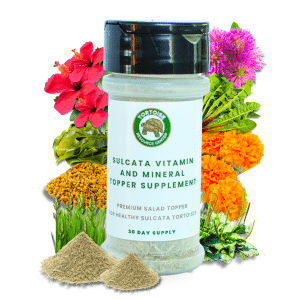
Sulcata Vitamin & Mineral Topper Supplement
30-Day Supply | 2 oz (56 g)
$24.99
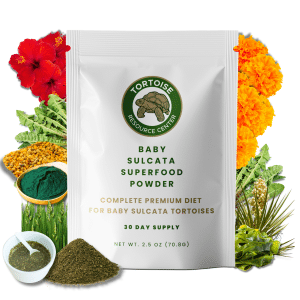
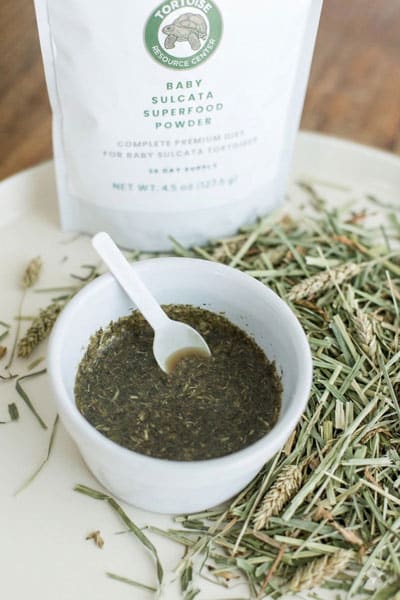
Baby Sulcata Tortoise Superfood Powder
30-Day Supply | 2.5 oz (70.8 g) Bag
$24.99
Never Feed
- Iceberg lettuce — nutritionally empty and can cause diarrhea. It contributes water and little else.
- Spinach and chard — the oxalate problem covered above. They work against calcium absorption.
- Avocado — toxic to reptiles. Not a matter of quantity.
- Rhubarb — contains oxalic acid in concentrations that are harmful to tortoises.
- Mushrooms — can be toxic. The risk is not worth any nutritional benefit.
- Dog or cat food — completely wrong nutritional profile for a herbivorous tortoise. Animal protein at this level causes kidney stress and is never appropriate.
- Bread, pasta, or any processed human food — tortoise digestive systems are not equipped for processed carbohydrates.
Limit Severely
- Fruit — under 5% of total diet. High sugar content causes digestive problems and contributes to abnormal growth patterns when offered regularly.
- Cruciferous vegetables like broccoli and cabbage — fine occasionally, but in larger amounts they contain goitrogens that can interfere with thyroid function.
- High-phosphorus foods like corn — these can block calcium absorption even when you’re supplementing calcium correctly. Bad calcium-to-phosphorus ratios are one of the most common hidden problems in sulcata diets, and high-phosphorus foods are the primary cause.
Protein in Baby Sulcata Nutrition: The Misunderstood Nutrient
This is where a lot of sulcata keepers get confused — and understandably so, because the answer is counterintuitive. Adult sulcatas need very low protein diets, typically 6 to 8 percent of total dietary content. But babies actually need more protein to support their rapid growth. The target range for baby sulcata nutrition is around 12 to 15 percent protein content in the overall diet.
The critical qualification: this additional protein should come entirely from plants. Young grass shoots, fresh clover, alfalfa plants, and high-quality tortoise pellets designed for growing animals are the appropriate sources. No animal protein, ever. Sulcata digestive systems are not equipped to process animal-based protein, and feeding it — even occasionally — puts unnecessary and lasting stress on kidneys that are still developing.
The protein distinction between adults and babies is one of the most practically important things to understand about baby sulcata nutrition, and it’s one of the most commonly missed. Keepers who apply adult low-protein guidelines to hatchlings consistently produce animals with stunted growth and underdeveloped shells. Keepers who apply appropriate juvenile protein targets while keeping sources plant-based produce animals that develop on track.
Supplementation: Beyond Calcium
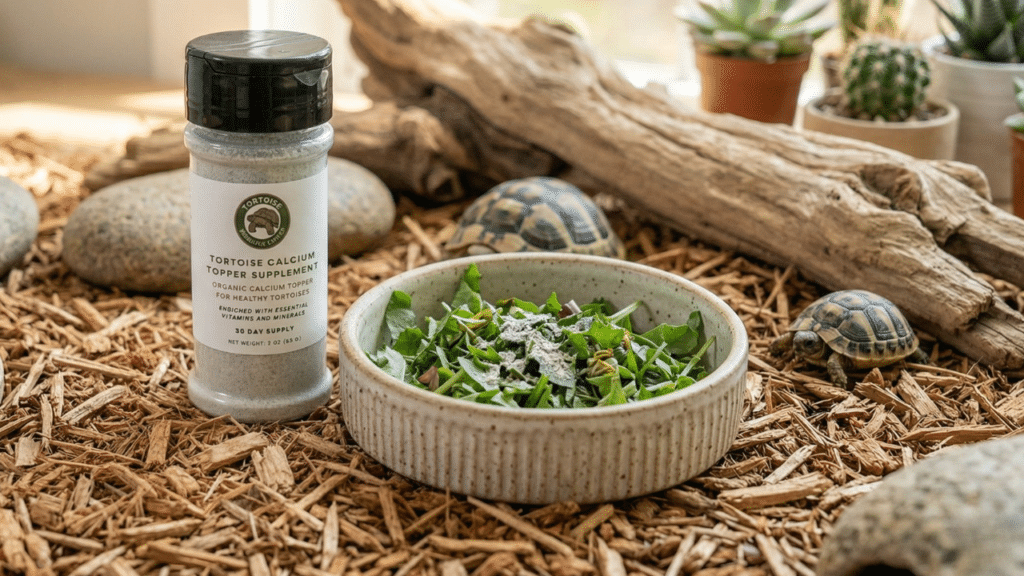
Calcium is the supplement that gets the most attention in sulcata nutrition guides, and for good reason — it’s critical for shell and bone development, and the consequences of deficiency are visible and serious. But stopping at calcium leaves significant gaps in baby sulcata nutrition that calcium alone cannot address.
Getting Calcium Right
Dust food with calcium without D3 five to six times per week. Add calcium with D3 once or twice per week — but only if your UVB lighting setup isn’t reliable, since D3 is fat-soluble and accumulates to harmful levels when oversupplemented. The dependency matters: calcium supplementation only works when D3 status is adequate, and D3 status depends on UVB quality. A tortoise with an aging or incorrectly positioned UVB bulb will absorb minimal calcium regardless of how consistently you dust.
Trace Minerals and Vitamins
Beyond calcium, baby sulcatas need trace minerals — selenium, zinc, magnesium — that basic calcium supplements typically don’t include. These minerals support bone mineralization, protein synthesis, and immune function in ways that are less visible than calcium deficiency but equally important over the developmental period. A quality reptile multivitamin covering these gaps, dusted on food once or twice per week, fills what diet alone often misses.
Hydration and Feeding Schedule: The Practical Daily Framework
Hydration — More Critical Than Most Keepers Realize
Hydration is one of the most overlooked dimensions of baby sulcata nutrition, and dehydration can become life-threatening in hatchlings far more quickly than most new keepers expect. Unlike adults, who have developed metabolic reserves and can absorb moisture passively from their environment more effectively, hatchlings need active hydration support.
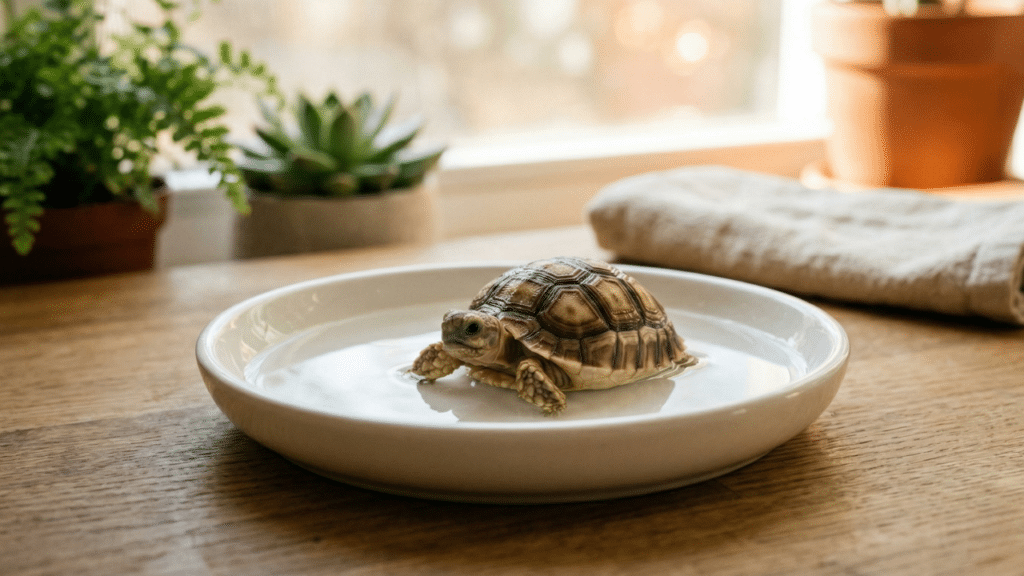
The most important practice: soak your baby sulcata in shallow, lukewarm water two to three times per week. The water should come up no higher than the bottom edge of the shell — deep enough to drink from, not deep enough to stress the animal. Ten to fifteen minutes per session is sufficient. This single practice does more for hydration and shell health than almost any other individual care decision for young tortoises.
Alongside soaking: always have fresh, clean water available in the enclosure in a shallow dish the tortoise can easily access. Mist food lightly before serving to increase surface moisture. Lean on water-rich vegetables like cucumber and squash as part of the 10–15% vegetable component of the diet — they contribute meaningfully to daily hydration.
Feeding Schedule
Under six months, feed daily. Very young hatchlings — the first 6 to 8 weeks — can even be fed twice daily, morning and afternoon, to support their extremely rapid growth rate during this initial phase. As they approach 6 to 12 months, once daily feeding is appropriate for most individuals. Beyond 12 months, begin transitioning toward every-other-day feeding as growth rates stabilize, keeping grasses and hay available freely on off-days.
Always offer food in the morning, timed to coincide with or shortly after the basking period begins. Sulcata digestion is temperature-dependent — a tortoise that has warmed up to basking temperature will digest a morning meal dramatically more effectively than one fed in the evening when temperatures are dropping. Never feed late in the day, and never feed a cold tortoise.
For portion size, a practical rule: offer an amount of food roughly equal to the surface area of your tortoise’s shell. Your hatchling should be able to finish most of what you offer within two to three hours during the active warm part of the day. Consistent portions finished within that window indicate appropriate feeding amounts. Consistently empty dishes within 30 minutes suggest portions are too small; significant uneaten food remaining after three hours at correct temperature suggests portions are too large or temperature may be the issue.
Baby Sulcata Nutrition by Age: How the Diet Evolves
0–6 Months: Maximum Nutritional Support
This is the highest-demand period in the entire lifespan of a sulcata. Prioritize softer plant material — soak dried hays, offer tender young grass shoots, and finely chop harder vegetables. Feed daily, soak three times per week, and supplement consistently. Weigh weekly and photograph the shell monthly. Act immediately on any concerning changes — at this age, problems escalate quickly.
6–12 Months: Sustained Intensity with Increasing Variety
Maintain daily feeding and continue the soaking routine. Begin expanding the range of grasses and greens offered, including slightly tougher plant material as the digestive system matures. Protein levels should remain in the 12–15% range. This is a good time to begin offering whole dandelion plants rather than just the leaves, and to introduce a wider rotation of leafy greens if the diet has been narrow.
12–18 Months: Beginning the Transition
As the tortoise approaches juvenile status, begin shifting the protein content gradually downward — reducing high-protein foods like alfalfa and clover in favor of a higher proportion of grasses and hays. Begin transitioning toward every-other-day feeding if growth rates and body condition support it. Keep close watch on the shell during this period — dietary transitions often reveal whether previous conditions were optimal.
18+ Months: Adult Preparation
Continue the gradual protein reduction toward the 6–8% adult target, paced over several months rather than weeks. The transition should be slow and monitored. Any sign of actual weight loss or significant activity reduction signals the reduction is moving too fast. Err on the side of caution — remaining slightly above adult protein levels for an extra few months is far less harmful than transitioning too abruptly.
Warning Signs That Baby Sulcata Nutrition Isn’t Working
Your tortoise’s body is the most reliable feedback mechanism you have. These signs indicate that something in the diet or environment needs immediate attention:
Shell-Related Warnings
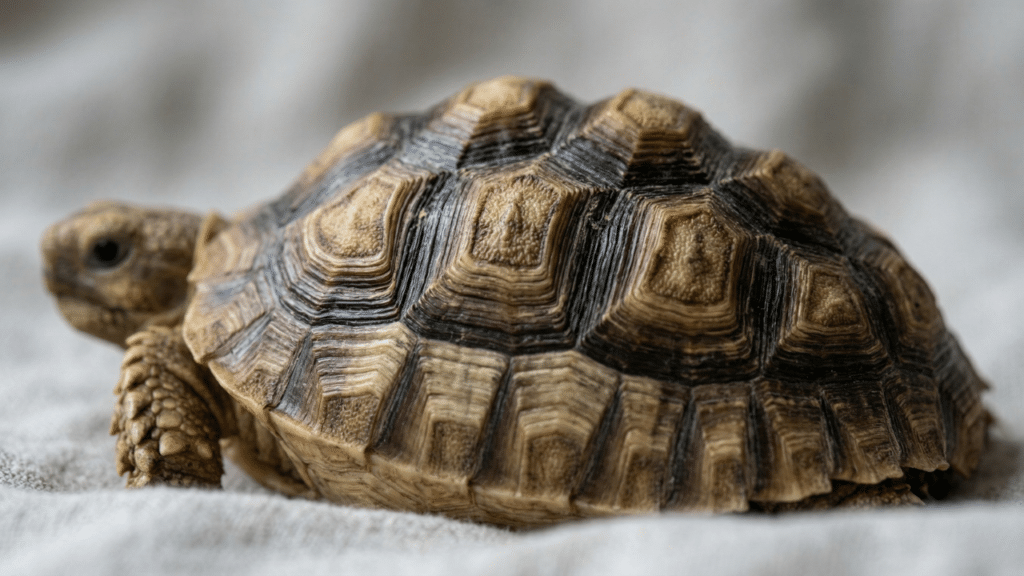
- Shell pyramiding — raised, pointed scutes forming on a young hatchling are a combined nutrition and humidity signal. Both need to be reviewed when pyramiding appears early.
- Soft shell areas or a shell that flexes — this is metabolic bone disease developing, almost always from calcium deficiency, inadequate UVB, or both.
- Abnormal coloration or uneven scute growth — these can reflect nutritional imbalances that are worth investigating even without other obvious symptoms.
Behavioral and Physical Warnings
- Lethargy at correct temperatures — a well-nourished hatchling at basking temperature is active and curious. Persistent lethargy without obvious illness warrants a diet review.
- Rapid weight gain with a soft or squishy shell — this is the specific combination that indicates metabolic bone disease developing in the context of overfeeding. Growth rate and shell firmness should be proportional.
- Stunted growth over multiple consecutive weeks — if weight and shell measurements are plateauing without obvious illness or temperature issues, diet quality and composition are the first places to look.
- Loss of appetite or complete refusal — a hatchling that was eating reliably and suddenly stops is signaling something. Rule out temperature first, then stress factors, then health issues. Don’t wait more than 48 to 72 hours before consulting a reptile veterinarian for young animals.
If you see any of these signs, don’t wait and don’t guess. Adjust the diet based on what you observe, review the environment systematically, and contact a reptile veterinarian for anything that doesn’t respond to straightforward correction within a week or two.
The Most Common Baby Sulcata Nutrition Mistakes
These patterns appear consistently in keeper communities and rescue intake records. Knowing them in advance is worth more than any amount of after-the-fact troubleshooting:
- Too much fruit. High sugar content causes digestive problems, abnormal growth patterns, and sets up learned preference problems that are difficult to reverse. Fruit is not a health food for sulcatas — it is an occasional treat that becomes a problem when offered regularly.
- Feeding the same few foods every day. Dietary variety is not optional — it is the mechanism through which baby sulcata nutrition builds a complete amino acid and micronutrient profile. A diet of dandelion and collard greens, even if those are excellent foods, is nutritionally incomplete over time.
- Ignoring the calcium-to-phosphorus ratio. Supplementing calcium does not help if the diet simultaneously contains high-phosphorus foods that block its absorption. Both sides of the ratio matter.
- Applying adult diet guidelines to hatchlings. The low-protein, high-fiber adult sulcata diet is inappropriate for growing animals and actively impairs development if applied to hatchlings.
- Inconsistent supplementation. Calcium and vitamins dusted on food sporadically provide substantially less benefit than smaller amounts applied on a reliable schedule. Consistency matters more than quantity.
- Feeding late in the day or to a cold tortoise. Digestion in sulcatas is temperature-dependent. Food fed to a cold animal isn’t nutritional — it becomes a digestive problem.
Baby Sulcata Nutrition Is a First-Year Investment That Pays for Decades
The nutrition window in the first 6 to 12 months is the most consequential dietary period in your sulcata’s entire life. Get the ratios right, keep it consistent, hydrate actively, supplement smartly, and feed at the correct time and temperature. None of that is complicated once you understand what you’re doing — and now you do.
Baby sulcatas that receive appropriate nutrition during this period develop strong, properly-formed shells, robust immune systems, healthy kidneys and organs, and the physical foundation for a life that can span 70 years or more. The inverse is also true: nutritional deficiencies during this window produce outcomes that no amount of later correction can fully undo.
The effort you invest in getting baby sulcata nutrition right during these first months is not optional extra care. It is the work of building an animal that will thrive for decades — and it is fully within your ability to get right.