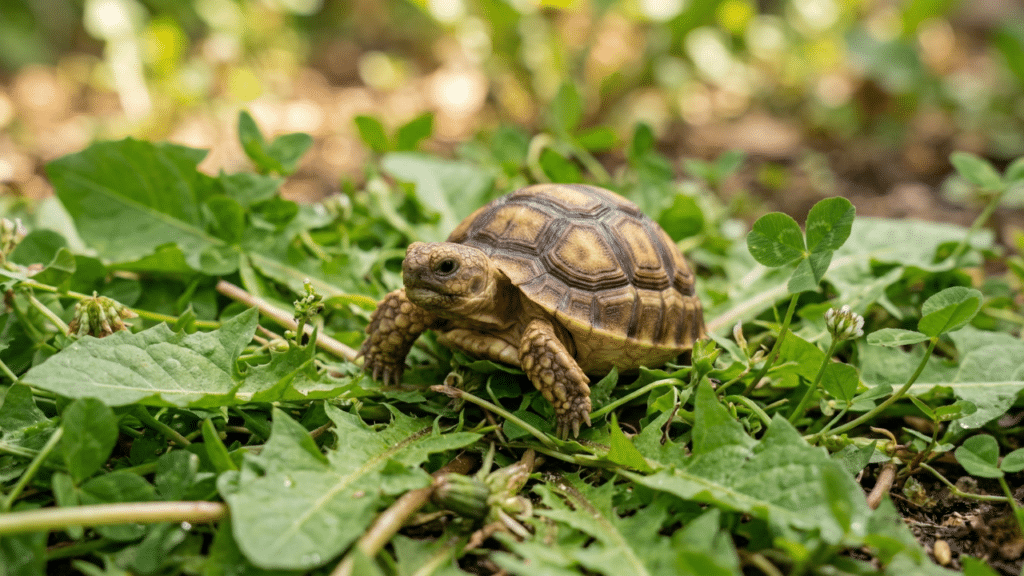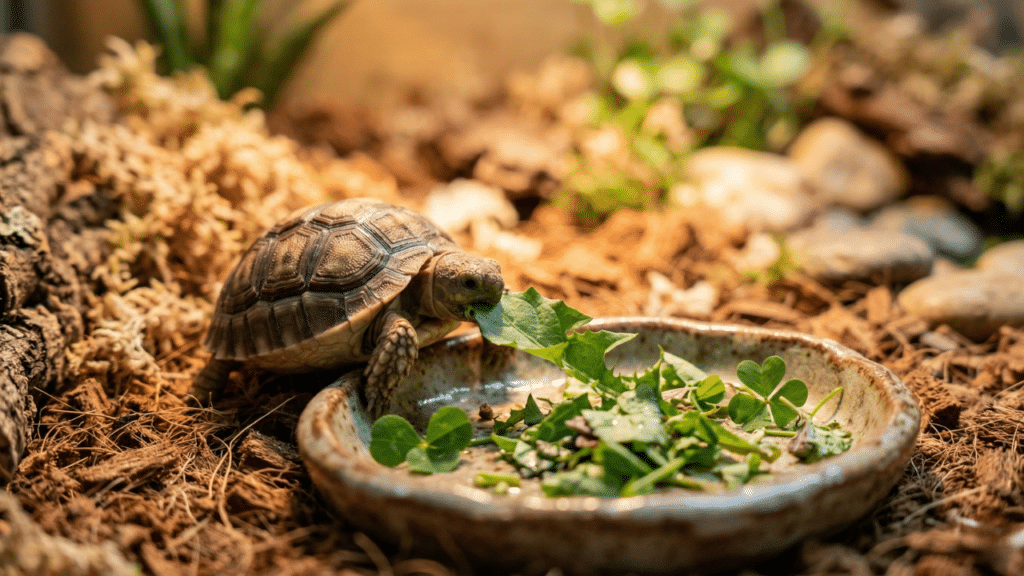
Here’s something every sulcata owner figures out pretty quickly: these tortoises have opinions about food. Real opinions. They’ll bulldoze toward a dandelion or a strawberry and walk straight past a pile of nutritious collard greens without slowing down. If you’ve ever wondered what do sulcata tortoises like to eat — and more importantly, how to use that knowledge without letting your tortoise eat itself into a nutritional corner — this is the guide.
The central tension in feeding sulcatas is that what they love most and what they need most don’t always overlap. Fruit, sweet vegetables, water-rich foods — these get enthusiastic responses. Fibrous grasses and bitter leafy greens, which should form the actual foundation of the diet, often get ignored or sorted around. The goal isn’t to win a battle of wills over every meal. It’s to understand the evolutionary logic behind your tortoise’s preferences and use that logic as a tool.
This post covers what sulcatas genuinely love and why, how those preferences shift across life stages, and the practical strategies that use favorite foods as a gateway to better overall nutrition — without turning feeding time into a daily negotiation. The video below covers the highlights in around five minutes; the written sections below expand every point in more depth.
What Sulcata Tortoises Like to Eat in the Wild — and Why It Explains Everything
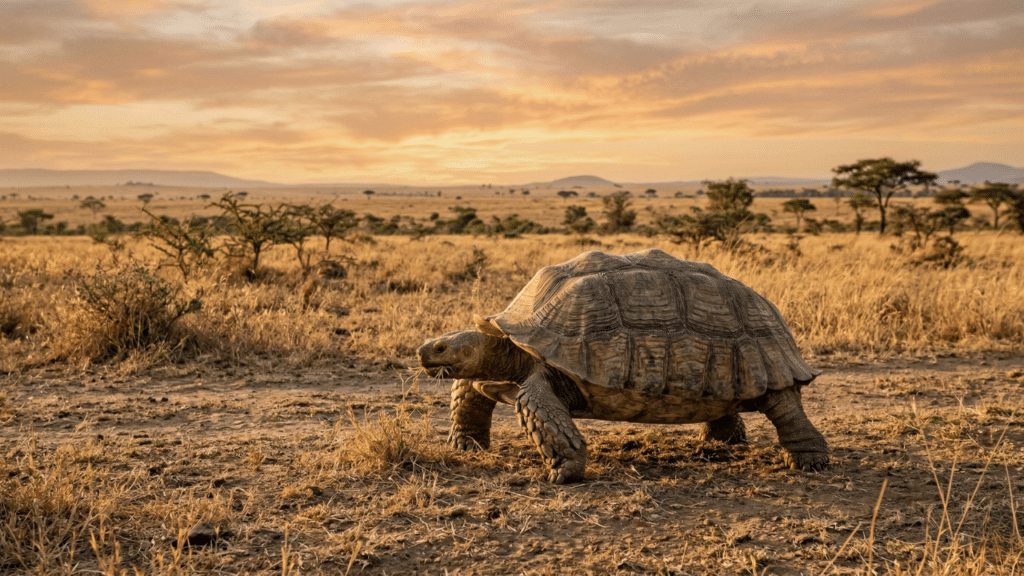
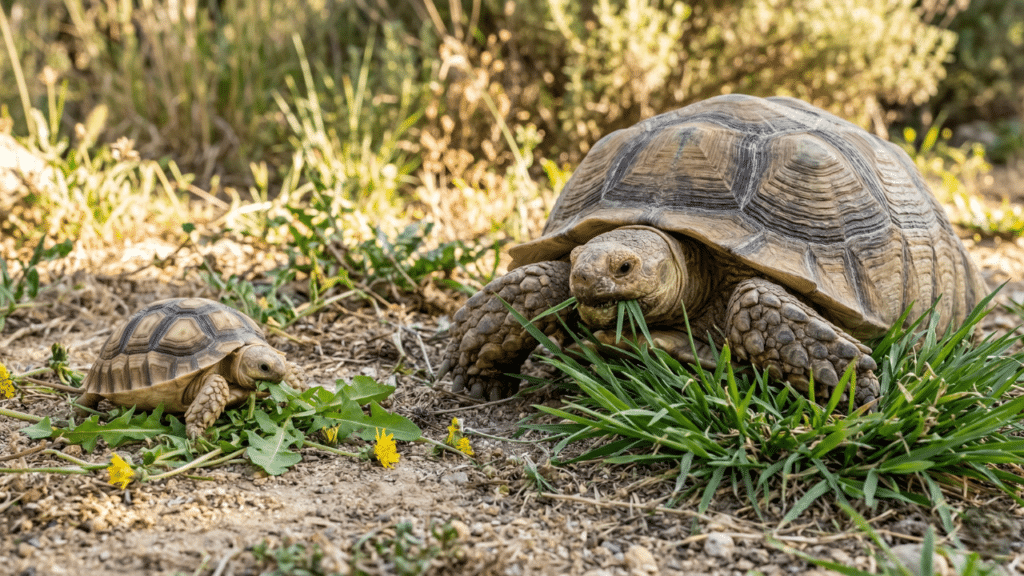
To understand what your sulcata wants to eat, start with what they eat in their native habitat. In the African savanna and Sahel, wild sulcatas are grazers — they spend most of the day walking and foraging, and grasses make up 50 to 70 percent of their natural diet. Beyond grass: desert shrubs, seasonal fruits and flowers when they’re available, cacti, and during dry seasons, even tree bark and fallen leaves.
Wild sulcatas are opportunists, not connoisseurs. They eat what’s available in their environment, which changes dramatically with the seasons. During wet seasons they gorge on tender young grasses and whatever ripe fruits they encounter. During dry seasons they survive on whatever fibrous, low-moisture material they can find.
This seasonal feeding pattern is directly responsible for the preference patterns you see in your captive sulcata. The instinct to seek out water-rich, sweet, and energy-dense foods when they’re available is deeply wired — it’s a survival strategy for an animal that evolved in an environment where such foods were seasonal luxuries, not daily staples. Your tortoise isn’t being irrational when it charges toward a piece of watermelon and ignores hay. It’s doing exactly what millions of years of evolution trained it to do.
Understanding this also explains why your sulcata might seem to change food preferences throughout the year, even in captivity with consistent food availability. Seasonal instincts don’t disappear just because the food supply is constant — they just manifest as shifting appetite intensity for different food types.
The Three Reasons Sulcatas Prefer What They Prefer
Almost every sulcata food preference can be traced back to one of three evolutionary drivers. Understanding these makes the preferences feel logical rather than frustrating — and makes it much easier to work with them strategically.
1. High Water Content
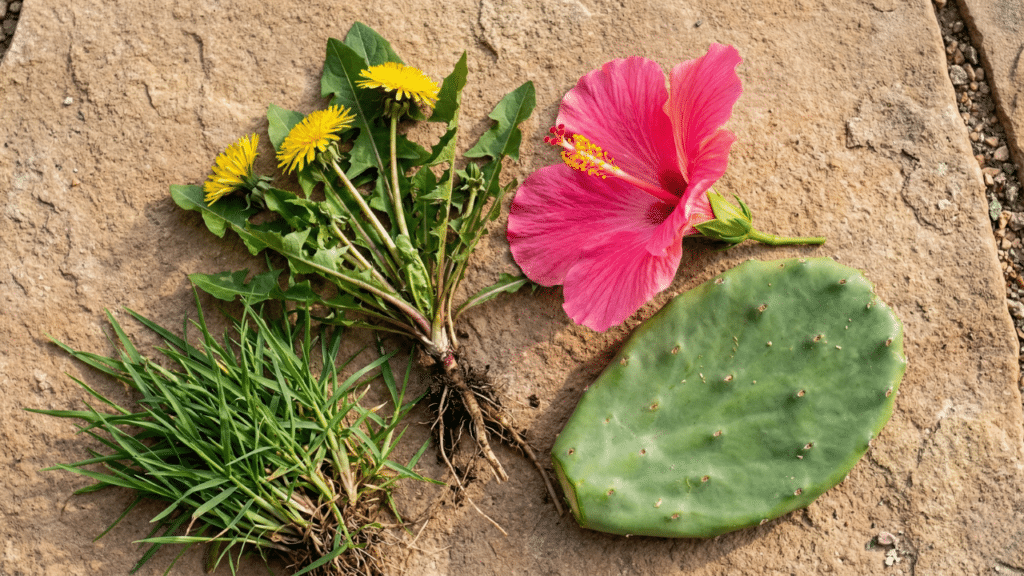
In an environment where standing water is often scarce, a tortoise that instinctively seeks out water-rich plants survives longer. That instinct runs continuously in captivity, which is why sulcatas so reliably gravitate toward cucumber, squash, watermelon, fresh dandelion, and prickly pear cactus — all foods with high moisture content — even when they have access to a full water bowl. The choice isn’t about thirst; it’s a deeply embedded preference for foods that historically signaled hydration security.
This preference is most pronounced in tortoises that are chronically dehydrated from insufficient enclosure humidity or infrequent soaking. When a sulcata seems obsessed with high-moisture foods to the exclusion of everything else, it’s worth checking the humidity environment before concluding the tortoise is simply picky.
2. Sweet and Mild Flavors Over Bitter
Like most herbivores, sulcatas have a built-in preference for mildly sweet foods. Sweetness signals ripeness and energy density in the natural world — it’s a reliable indicator that a plant is at peak nutritional value for carbohydrate content. Bitterness, by contrast, often signals plant defense compounds or toxins. The tortoise brain that favors sweet and avoids bitter is behaving rationally for its evolutionary context.
In captivity, this plays out as a predictable preference hierarchy: fruit beats vegetables, vegetables beat leafy greens, leafy greens beat hay. Red bell peppers beat mustard greens every single time. This hierarchy doesn’t mean sulcatas can’t eat bitter foods — they can and do, especially as they mature — but it explains why they need encouragement rather than unfettered choice when it comes to the more bitter, fibrous foods that should dominate their diet.
3. Visual Attraction to Bright Colors
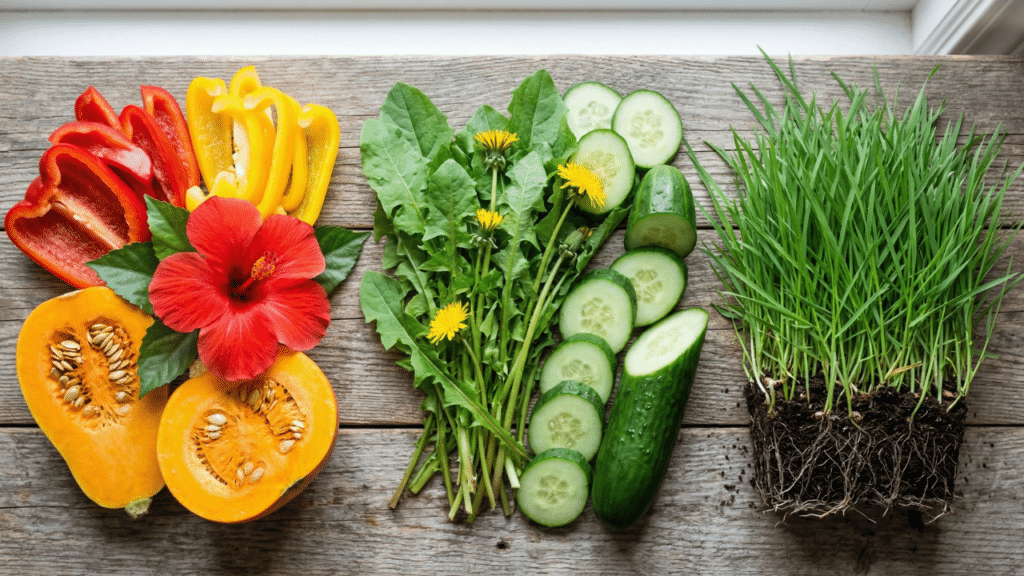
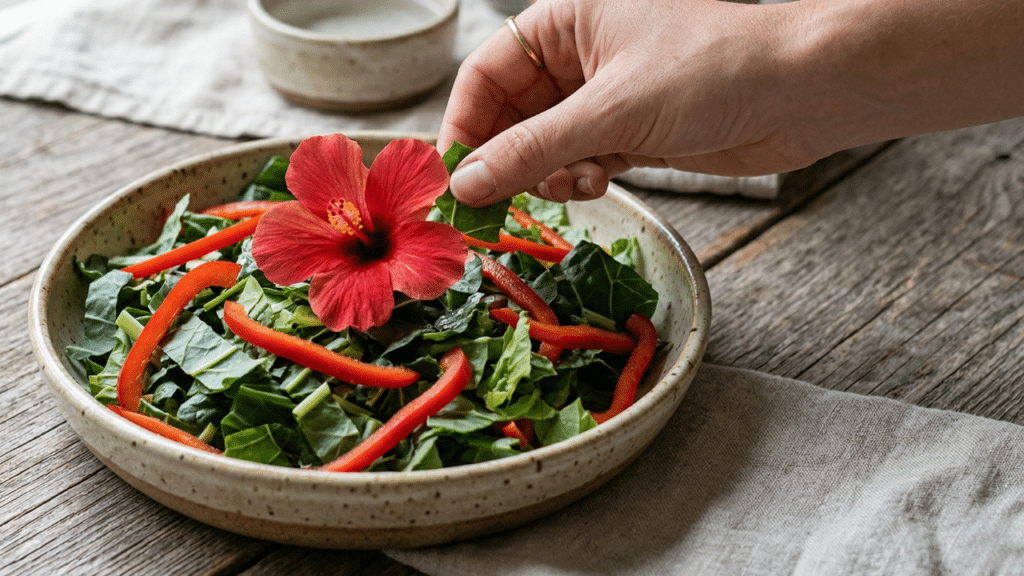
Many sulcatas show strong visual interest in brightly colored foods — red and yellow bell peppers, orange squash, yellow dandelion flowers, pink hibiscus blossoms. In the natural world, vivid color is often associated with ripeness, nutritional density, and the presence of compounds the animal needs. This color attraction can be used deliberately in feeding: placing a colorful flower on top of a plate of greens draws the tortoise to investigate, and investigation often leads to eating foods they might otherwise have walked past.
What Do Sulcata Tortoises Like to Eat Most? The Full Favorites List
Here’s the honest breakdown — organized not just by what sulcatas love, but by where each food actually belongs in the diet. These two things don’t always align, and that distinction matters.
| Food | Preference Level | Diet Role | Notes |
|---|---|---|---|
| Dandelion (whole plant) | Universal favorite | 10–20% of diet | The single most accepted food across all ages. Leaves, flowers, and stems all eaten. |
| Prickly pear cactus pad | Universally loved | 10–20% of diet | Remove spines. High water content, good Ca:P ratio. Excellent regular food. |
| Fresh bermuda grass | High — when young | 40–50% of diet | Foundation food. Preference drops with maturity of grass — young shoots always win. |
| Wheatgrass | High | Part of grass % | Consistently accepted across all ages. Good starter grass for reluctant grazers. |
| Hibiscus flowers | Very high | Occasional treat | Excellent visual bait. Safe and nutritious in small amounts. |
| Red/yellow bell pepper | Very high | 10–15% veg mix | A color and flavor favorite. Use as a mix-in or gateway food alongside greens. |
| Butternut/yellow squash | High | Part of veg % | High water content, mild flavor. Good vehicle for mixing in less-favored greens. |
| Collard greens | Moderate | 30–35% of diet | Most accepted of the bitter leafy greens. Often eaten even by reluctant tortoises. |
| Endive / escarole | Moderate | Part of greens % | Better accepted than mustard or turnip greens. Good regular rotation green. |
| Mustard greens | Low–moderate | Part of greens % | Many tortoises avoid. Use as a mix-in rather than standalone. |
| Turnip greens | Low–moderate | Part of greens % | Similar to mustard greens — better accepted mixed into preferred foods. |
| Watermelon / cantaloupe | Extremely high | Under 5% — treat | High sugar. Powerful motivator but reserve as an occasional treat, not daily. |
| Strawberries / grapes | Extremely high | Under 5% — treat | Use sparingly as motivational rewards. Excellent gateway bait. |
One takeaway from this table: dandelion is genuinely the single most universally accepted food across all sulcata ages and personalities. If your tortoise is being difficult about food for any reason, dandelion — offered as the whole plant including flowers and stem — is almost always the place to start.
Are You Starving Your Tortoise?
Save 10% on premium tortoise food and supplements from Tortoise Resource Center on Amazon now using code BUYNOWGET10
Sulcata Vitamin & Mineral Topper Supplement
30-Day Supply | 2 oz (56 g)
$24.99
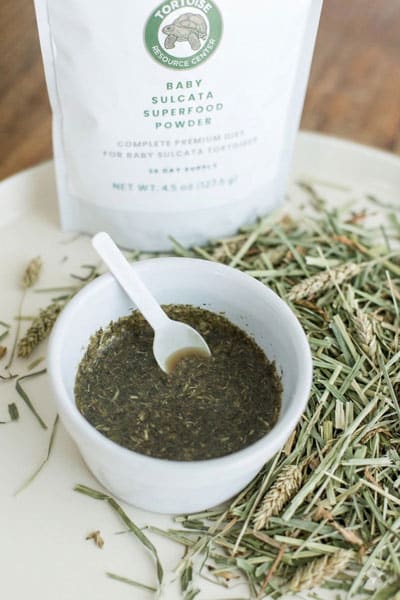
Baby Sulcata Tortoise Superfood Powder
30-Day Supply | 2.5 oz (70.8 g) Bag
$24.99
How What Sulcata Tortoises Like to Eat Changes With Age
Food preferences in sulcatas aren’t fixed — they shift meaningfully across the three main life stages, and understanding this shift prevents a lot of unnecessary keeper anxiety.
Baby Sulcatas (0–12 Months): Work With the Biology
Young hatchlings strongly prefer soft, tender, water-rich, and mildly sweet foods. They frequently reject tough grasses, bitter greens, and anything dry or fibrous. This isn’t pure pickiness — it’s biology. Baby sulcatas are hindgut fermenters whose gut bacteria colonies are still establishing themselves, and their digestive systems genuinely aren’t ready to process coarse, mature plant fiber efficiently yet.
For hatchlings, the practical approach is to lean into preferences rather than fight them: young, tender grass shoots rather than mature hay, finely chopped vegetables, fresh dandelion, and moist foods offered at room temperature or slightly warmed. Forcing dry, coarse hay on a two-month-old hatchling isn’t nutritional discipline — it’s ignoring developmental reality. The palate expands as the gut matures.
Juveniles (1–3 Years): The Expansion Window
As sulcatas move into the juvenile phase, their gut bacteria colonies mature, their digestive efficiency increases, and their food acceptance broadens noticeably. This is the most important window for introducing the foods they resisted as babies — varied grass types, bitter leafy greens, larger and more fibrous plant pieces.
Juveniles that were exposed to a wide variety of foods during the first year make this transition easily. Those that were fed a narrow range of preferred foods during the early months often show more resistance at this stage and require a more deliberate, gradual introduction process. The feeding choices made during months 0–12 have a measurable effect on how easy or difficult the juvenile feeding transition is.
Adults (3+ Years): The Most Flexible Stage
A well-raised adult sulcata is the most nutritionally flexible of all three stages. A properly socialized adult should be able to eat tough, fibrous mature grasses, tolerate bitter leafy greens without difficulty, and handle large, challenging food pieces without any issues.
If your adult sulcata is still extremely picky — refusing grasses, rejecting bitter greens, fixating on sweet foods — that is almost always a signal that the diet wasn’t varied enough during the first two years of life, combined with the learned preference for preferred foods that accumulated over time. Adult picky eating is correctable, but it takes longer and requires more patience than addressing the same patterns in younger animals.
Using What Sulcata Tortoises Like to Eat as a Feeding Strategy
Here’s the central insight that makes sulcata feeding much less frustrating: the goal isn’t to feed them only what they love. It’s to use what they love strategically to get them eating what they need. Their color and flavor preferences are a tool — and a remarkably effective one when used correctly.
The Mix Approach
Combine preferred foods with less-favored but nutritionally important ones in the same meal. Chop bright red bell pepper strips into a bowl of mustard greens — the tortoise investigates the color, starts eating the pepper, and works through the greens in the process. Mix a small amount of squash into soaked grass hay. Place a hibiscus flower on top of a plate of collard greens as visual bait. You’re essentially using their color and flavor preferences as a Trojan horse for better nutrition — and it works.
The key is subtlety. Mix preferred foods through the meal rather than layering them on top where the tortoise can pick them off selectively. A tortoise that can eat the strawberry off the top without touching the greens beneath it has beaten the strategy. Chopping and mixing prevents clean separation.
Timing: Offer Important Foods First
Offer nutritionally critical but less preferred foods — grasses, bitter leafy greens — first thing in the morning when the tortoise is hungriest and basking temperature has been reached. Save preferred foods for after the essential foods have been consumed. A tortoise that has filled up on watermelon has no motivation to work through a plate of hay. A tortoise that has been offered hay first, with watermelon as an occasional follow-up after the main meal, learns a different expectation over time.
Temperature and Texture Modifications
Food offered at room temperature or slightly warmed is more aromatic and appealing than cold food from the refrigerator. Scent compounds that drive food interest in sulcatas are more volatile at higher temperatures — a warmed plate of dandelion greens smells more interesting than a cold one. Soaking dried hay in water for 10 to 15 minutes before offering it dramatically improves acceptance in all age groups, particularly for hatchlings and juveniles. Finely chopping harder vegetables makes them accessible for younger tortoises whose beaks aren’t strong enough for large pieces.
Gateway Foods: Build the Diet Incrementally
Use accepted foods as entry points for introducing new ones. Once a tortoise reliably eats fresh bermuda grass, begin mixing other grass varieties alongside it in gradually increasing proportions. Once they accept collard greens when mixed with bell pepper, reduce the bell pepper proportion over several weeks. Once dandelion is established as a reliable anchor food, use it to carry less-accepted greens mixed in alongside it. The progression should be measured in weeks, not days — sulcata digestive systems and food preferences both adapt slowly.
The Three Most Common Preference Problems — and How to Fix Them
Fruit Addiction
The tortoise will only reliably eat sweet fruit and ignores grasses and greens entirely. This is the most nutritionally dangerous preference pattern because fruit provides minimal fiber, excessive sugar, poor calcium-to-phosphorus ratios, and none of the complex plant compounds that appropriate grasses and greens deliver.
The fix requires structure rather than elimination. Stop offering fruit as a standalone food. Instead, use it only as a mix-in with appropriate foods, and only offer it after grasses and greens have been consumed rather than before. Reduce portion sizes gradually over weeks — abrupt removal in an established fruit addict often results in complete food refusal, which creates its own problems. The reduction should be patient and deliberate.
Vegetable-Only Eating
The tortoise accepts bell peppers, squash, and similar vegetables but ignores grasses — the opposite of what the diet should look like in terms of proportions. Grasses should constitute 50 to 60 percent of an adult sulcata’s diet; a tortoise eating primarily vegetables is nutritionally imbalanced even if it appears to be eating well.
Fix this by gradually mixing preferred vegetables into grass hay and slowly shifting the ratio toward more grass over several weeks. Start with a ratio the tortoise will accept — even 80% vegetables, 20% grass — and adjust incrementally. The vegetable preference becomes a vehicle for grass introduction rather than an obstacle to it.
Seasonal Appetite Suppression
Some sulcatas go through phases of dramatically reduced interest in food, including foods they normally love. Before assuming this is a preference problem, check the environment. Low humidity, suboptimal temperatures, a recent enclosure change, or a new animal in the household can all suppress appetite significantly. Review every environmental parameter before concluding the issue is dietary.
If the environment checks out and appetite suppression continues for more than a week in an adult or more than three to four days in a baby, that is a veterinarian call — not a feeding strategy problem. Prolonged appetite loss in a young tortoise especially should always be assessed professionally rather than managed through food tactics.
Filling the Nutritional Gap When Preferences Limit What Gets Eaten
Even when feeding strategies are working well, a sulcata that’s being selective about food is almost certainly leaving micronutrient gaps. The foods they gravitate toward naturally — fruits, sweet vegetables, water-rich plants — tend to be lower in the trace minerals, B vitamins, and amino acid diversity that the broader diet is supposed to deliver.
The most practical approach to this is supplementation applied to whatever the tortoise will currently accept, rather than waiting until the diet is fully corrected before addressing nutritional gaps.
Dusting a quality supplement over preferred foods — even imperfect ones — ensures that while the diet is being adjusted, the nutritional baseline is covered. The Vitamin and Mineral Topper covers the trace minerals, B vitamins, and fat-soluble vitamins that selective diets typically miss, applied a few times per week over whatever the tortoise is eating. For hatchlings and juveniles in active preference development phases, the Baby Sulcata Superfood Powder (4.5 oz) or 2.5 oz option provides the amino acid profile and micronutrient completeness that growth-phase sulcatas need regardless of how varied their fresh diet currently is. Use code BUYNOWGET10 for 10% off.
Work With Their Preferences, Not Against Them
The bottom line on what sulcata tortoises like to eat: their preferences are logical, evolutionary, and surprisingly predictable once you understand the three drivers — water content, sweetness, and color. The challenge isn’t that their preferences are irrational; it’s that the foods their instincts favor most aren’t the foods that form the nutritional foundation of a healthy captive diet.
Working with those preferences rather than against them — using favorite foods as gateways, timing meals strategically, mixing preferred foods with important ones, and being patient with age-appropriate pickiness — produces much better outcomes than trying to override preferences through restriction alone. A sulcata that eats a varied, grass-based diet with occasional favorites is going to be a significantly healthier animal long-term than one that gets whatever it wants every day.
And if your tortoise is being difficult? Start with dandelion. The whole plant, flowers included. Across all ages, all personalities, and all phases of dietary adjustment — dandelion is almost always where agreement begins.